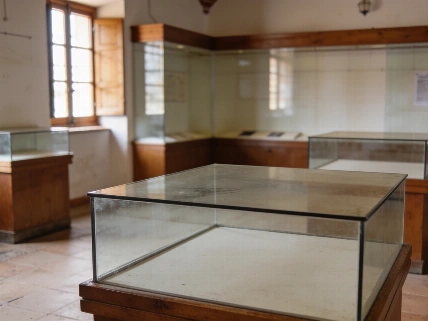
Twelve works received conservation treatment for the retrospective, including sculptures from parishes and religious orders. Organized and produced by the Andalusian Ministry of Culture, Historical Heritage and Sport, the exhibition brings 47 works from more than 30 brotherhoods, parishes, convents, museums and other institutions to the Museum of Fine Arts in Seville. It opened on 18 November 2026 and runs until 7 March 2027, occupying Room 5 and the museum’s temporary-exhibition galleries.
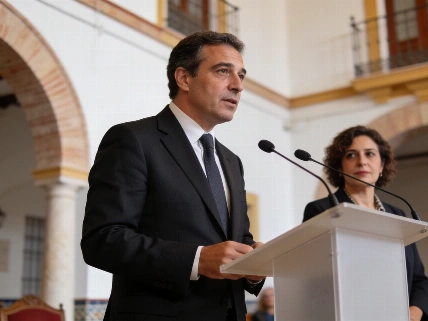
Patricia del Pozo, Andalusia’s culture, heritage and sport councillor, called it the most ambitious exhibition assembled to date on the sculptor. Curated by Ignacio Cano Rivero, Ignacio Hermoso Romero and Valme Muñoz Rubio, the display marks the fourth centenary of Juan de Mesa’s death in 1627 and brings together loans from across Spain. It is part of the museum’s wider effort to study and reassess leading figures of the Sevillian Baroque school.
Titled ‘Juan de Mesa (1583-1627)’, the exhibition follows his development from apprentice in Juan Martínez Montañés’s workshop between 1606 and 1610 to his final sculpture, the ‘Virgen de las Angustias’, commissioned from his native Córdoba. Mesa died in 1627, aged 44, after a career of about 15 years. The group sculpture, loaned by a Córdoba brotherhood, links his native city with the Sevillian artistic environment where his reputation developed.
Its eight sections combine chronological and thematic displays. They cover his early work and the new saints of the Counter-Reformation, alongside images of Christ and the Virgin. Three crucifixes are shown in the former convent church: the Cristo de la Vera Cruz, from Las Cabezas de San Juan; the Cristo de la Buena Muerte, from the hermandad de los Estudiantes; and the Cristo de la Conversión, from the hermandad de Montserrat. The selection surveys Mesa’s career and devotional sculpture, much of which remains associated with churches, processions and religious brotherhoods.
Museum specialists treated twelve works in preparation for the display. They include ‘San Ignacio de Loyola’ (1622), from the parish of San Francisco in El Puerto de Santa María, and ‘San Eloy’ (hacia 1618), from Seville’s parish of Santa Cruz. The conservation campaign was complete before the exhibition opened. The loans form part of a wider heritage effort. A separate project involving paintings at Barcelona’s MNAC was covered in this report on Sijena.
Other works on display include paintings by Juan de Uceda and Francisco de Zurbarán, alongside ‘San José con el Niño’ by Martínez Montañés. The sculpture offers a point of comparison with the master’s influence on his former apprentice. The museum’s own collection contributes the ‘Virgen con el Niño’ (or the ‘Virgen de las Cuevas’) and ‘San Juan Bautista’, among other sculptures. Together, the works place Mesa’s art among the sculpture and painting of the Sevillian Baroque.
The programme includes guided visits for groups of up to 14 people, available by advance reservation through the museum’s website. Four talks in the ‘Mirar un cuadro’ series begin on Sunday 22 November, when José Carlos Pérez Morales will discuss how Juan de Mesa’s reputation was constructed over four centuries. Later sessions are scheduled for 20 December, 17 January and 14 February. Francisco Javier Herrera will give the final talk, focusing on Mesa’s sculptures in the Americas.