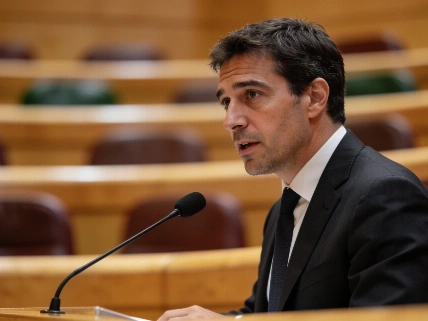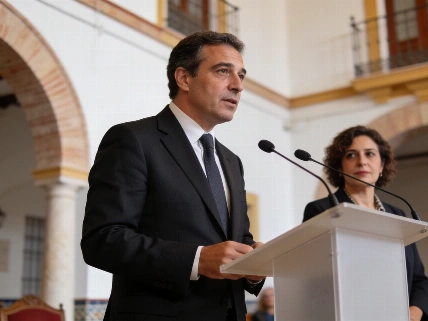
In Sevilla’s Macarena district, Toni Valero pointed to pressure on household budgets as he outlined the Frente Amplio’s response to rising prices. The Izquierda Unida deputy and coalition candidate said families were struggling with the cost of groceries and essential bills.
His proposal is to make wage updates in line with the consumer price index (CPI) mandatory and universal. Valero, coordinator-general of Izquierda Unida Andalucía and a Frente Amplio candidate, said the change would require reforming the Estatuto de los Trabajadores y las Trabajadoras. It would bring automatic increases for employees whose collective agreements do not provide for a pay update. The change remains a proposal, not an enacted law. Valero said only 39% of female workers in Spain were protected by wage rises in collective agreements.
The proposal comes amid a gap between negotiated pay rises and inflation. On 13 November, Spain’s CCOO trade union called on employers to resume wage negotiations after October’s CPI reached 4.9% year on year. CCOO reported that the average increase in collective agreements during 2026 was 3.06%, below both October inflation and the 3.4% average inflation rate over the preceding 12 months.
On 17 November, the same day Valero set out the proposal, the Spanish Government approved a 5.3% increase in the statutory minimum wage, from €1,221 to €1,286 gross per month in 14 payments. The rise of €65 per payment brings the annual minimum to €18,004 and was scheduled to take effect on 1 January, affecting about 2.5 million minimum-wage earners. The increase sets a wage floor; it does not automatically adjust pay covered by every collective agreement.
Valero blamed rising costs on what he called an unfair system. He accused speculators of driving up housing costs and prices in the shopping basket, and said food distributors were raising prices indiscriminately. He argued that the Partido Popular and Vox favour deregulation. He said the Partido Socialista lacks the resolve to confront speculators. Those are Valero’s characterisations of the parties’ positions.
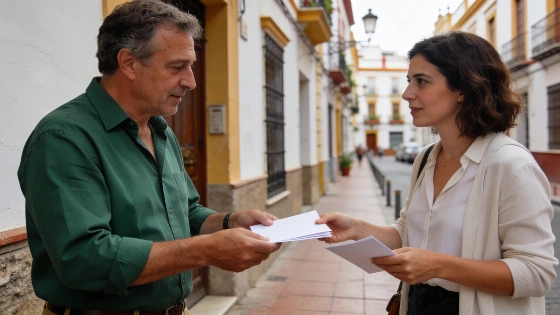
He made the remarks to reporters in Macarena, which he described as a working-class neighbourhood, alongside Engracia Rivera, the Frente Amplio’s number two candidate for Sevilla and an Izquierda Unida figure. They were there before taking part in an electoral leaflet distribution. A separate report on digital campaigning examined the gap between social-media visibility and votes.
Valero said the proposed reform would protect the purchasing power of workers whose collective agreements fail to update their pay. He said the coalition was prepared to change the statute to prevent those employees from losing purchasing power. Separately, Spain’s public-sector employees were due a 4.5% pay increase under a multi-year agreement covering 2025 to 2028 with CCOO and UGT, with CSIF also a signatory. A further 0.5% adjustment for 2026 was conditional on annual inflation exceeding 1.5%.