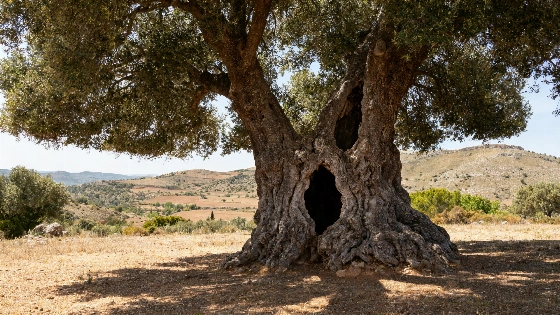
A private garden in Valencia now features a 500-year-old olive tree weighing six tons, installed after a challenging logistical operation. The rare transplant required heavy machinery, expert planning, and strict compliance with heritage laws.
A six-ton olive tree, estimated to be 500 years old, has been successfully transplanted into a private garden in Valencia, becoming the new focal point of the property. The operation, carried out by the local landscaping firm Jardines con Vida, demanded meticulous planning and specialized equipment to ensure the ancient tree’s survival and stability.
The owners selected the monumental olive from a nursery to replace a pine that had been destroyed during a recent storm, which left part of their garden damaged. Moving a living tree of this size is a rare undertaking, even for seasoned professionals. According to the team, the tree needed to be positioned approximately 50 meters from the house, requiring both a heavy-duty crane and a gondola truck designed for oversized loads.
Precision and Expertise
The greatest challenge was to relocate the centuries-old olive without harming its extensive root system or compromising its structural integrity. Before the tree’s arrival, workers prepared a large planting pit, carefully calculating the conditions needed for the olive to adapt to its new environment. The actual transfer involved lifting the massive trunk and root ball with a crane, then maneuvering it into place with the gondola truck—a process that demanded both precision and patience.
As noted by Talent24h, such operations are far from routine and require a combination of technical skill and respect for the tree’s age and value. The goal was not simply to move the tree, but to give it the best possible chance to thrive for generations to come.
The High Cost of Heritage Trees
Acquiring an ancient olive tree is a significant investment. Prices vary widely depending on the tree’s age, trunk size, health, provenance, and the complexity of the move. While younger olives are relatively affordable, centenarian specimens often cost over €1,000, and truly monumental trees can exceed €10,000 at the source—before factoring in transport and installation.
Additional expenses include hiring specialized machinery, skilled labor, and arranging for adapted transport. As a result, the final price for a fully installed ancient olive can be several times higher than the nursery price alone. This mirrors the broader trend of valuing agricultural heritage, as seen in efforts to revive historic plant varieties, such as the project to restore a lost Soria tomato from 1916 highlighted in Palencia.
Strict Regulations for Monumental Trees
The trade and relocation of ancient trees in Spain are tightly regulated. In the Valencian Community, Law 4/2006 on monumental tree heritage protects specimens that are at least 350 years old, over 30 meters tall, have a trunk circumference of six meters, or a canopy diameter of 25 meters. This legislation restricts the uprooting, transplanting, sale, and possession of protected trees, with exceptions only granted through official authorization. Violations can result in fines of up to €500,000 for the most serious cases.
For buyers, this means that purchasing a heritage olive is not just a matter of budget. It requires careful verification of the tree’s legal status, origin, and the conditions of its transfer. Ensuring compliance with these rules is essential, especially when dealing with trees of significant cultural and ecological value.
The successful installation of the 500-year-old olive in Valencia stands as a testament to what is possible when expertise, respect for heritage, and careful planning come together. It also highlights the growing appreciation—and responsibility—for preserving Spain’s living natural monuments.