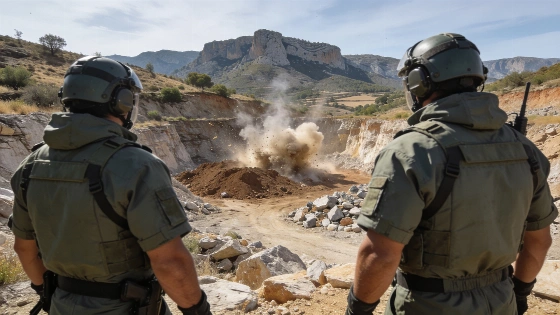
A cache of 68 artillery shells from the Civil War was unearthed in Villores, Castellón. Specialists carried out controlled detonations over several days. The find highlights the region's wartime legacy and ongoing safety challenges.
In a rare and significant operation, the Guardia Civil has safely neutralized 68 artillery shells dating back to the Spanish Civil War in the small village of Villores, Castellón. The discovery, made on August 6, involved a total of 544 kilos of explosive material, with each shell weighing around eight kilos. The shells, all of the same 75-millimeter type, were found buried and in poor condition, yet authorities confirmed their destructive potential remained intact despite decades underground.
The scale of the find required the Explosives Disposal Group (Gedex) from Castellón to extend their intervention over several days. The final phase concluded on August 10, when specialists carried out controlled detonations at the La Torreta quarry. According to the Guardia Civil, the shells lacked both fuzes and detonators, which made handling safer, but the explosive charge—trilite, weighing 345 grams per shell—was still present, though found separately from the casings.
This operation stands out not only for the quantity of munitions recovered in a single intervention but also for its historical significance. The presence of such a large, uniform cache in one location is considered exceptional. In comparison, throughout 2024, Gedex teams in Castellón province removed 36 war-related devices, including 20 artillery shells, six mortar grenades, and ten hand grenades, but these were spread across multiple sites and incidents.
The Villores discovery underscores the enduring impact of the Civil War on the Els Ports region. The area was a frontline during the 1938 Francoist offensive, with Morella, the comarca's capital, remaining under Republican control until April 4, 1938. The rapid advance of troops and the hurried abandonment of munitions led to many such arsenals being hidden and forgotten in the landscape. Nearly ninety years later, these remnants continue to surface, posing both historical interest and safety concerns for local communities.
Authorities emphasize that the shells, despite lacking fuzes, retained enough explosive material to be dangerous. The operation required careful planning and execution to ensure public safety. The incident also highlights the ongoing need for vigilance in rural areas with a history of conflict, as unexploded ordnance can remain hazardous for generations. In a related context, recent incidents elsewhere in Spain, such as the evacuation at La Vaguada shopping centre in Madrid following an arson attack, demonstrate the varied challenges faced by emergency services in ensuring public safety. For more on how authorities respond to such emergencies, see this report on the La Vaguada evacuation in Madrid.
Spain continues to deal with the legacy of its 20th-century conflicts, particularly in regions like Castellón where the frontlines shifted rapidly and large quantities of munitions were left behind. The Guardia Civil regularly reminds residents to report any suspicious objects and avoid handling potential explosives. The Villores case serves as a reminder of the hidden dangers that can persist in the countryside and the importance of ongoing vigilance and professional intervention.