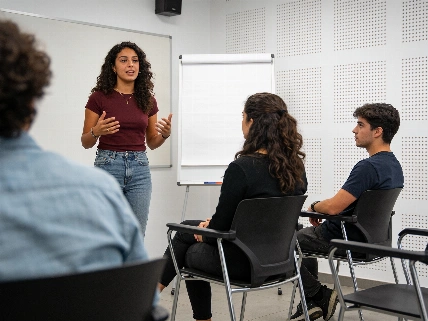
Gáldar hosted more than 160 local representatives and professionals at the eighth regional meeting of the Estrategia Canaria de Islas y Municipios Promotores de la Salud (ECIMPS). The gathering looked at how public services and residents can shape health promotion in their communities.
At the meeting, 69 of the Canary Islands’ 88 municipalities and six of its seven cabildos had joined or were in the process of joining the strategy. That represents about 78.4% of municipalities and 85.7% of cabildos; 19 municipalities and one cabildo had yet to join. Created in 2017, ECIMPS adapts national guidance to the islands and encourages local authorities to consider health in municipal and island policies. The Directorate General of Public Health of the Servicio Canario de la Salud promotes it with the Canary Islands Federation of Municipalities (FECAM) and the Canary Islands Federation of Islands (FECAI), as an inter-administrative effort to strengthen health locally.
Director general of Public Health José Fernando Díaz-Flores opened the event. He argued for a model of public governance that puts municipalities and residents at the centre of health promotion, recognising that wellbeing also depends on the social and educational conditions in which people live.
Díaz-Flores also pointed to the Canary Islands Strategy for the Promotion of Health and Wellbeing, presented in 2025. The wider framework sets out a health-policy roadmap through 2032, aligned with the priorities of Spain’s National Health System. It aims to improve quality of life and encourage healthy habits, while also seeking to reduce health inequalities across the archipelago and adapt the national strategy to the islands.
The programme focused on collaboration between local authorities and social organisations, health promotion in schools, and direct public participation. Presentations included municipal projects from Candelaria and Breña Baja, alongside Gran Canaria’s island council’s work on citizen participation and cooperation with third-sector organisations.
Education was the focus of a separate session, featuring initiatives from San Bartolomé de Lanzarote and Tacoronte. La Palma’s island council presented work supporting the mental health of children and young people affected by the volcanic eruption.
A regional agreement has also backed ten University of La Laguna sustainability projects for 2025-26, including climate planning and youth housing proposals, as reported in an earlier account.
A roundtable brought residents involved in local organisations and projects into the discussion. Participants came from Las Palmas de Gran Canaria and Gáldar, with another representative from Agulo and a representative from Gran Canaria’s island council. The event also presented the ‘Canarias Promueve Salud’ distinction for municipal health-promotion practices that could be shared with other areas.
The accompanying Feria de la Salud opened to the public at Gáldar’s sports centre on Thursday afternoon and Friday morning. Local organisations, schools and community projects used exhibition spaces to introduce health programmes and resources operating in municipalities across Gran Canaria.