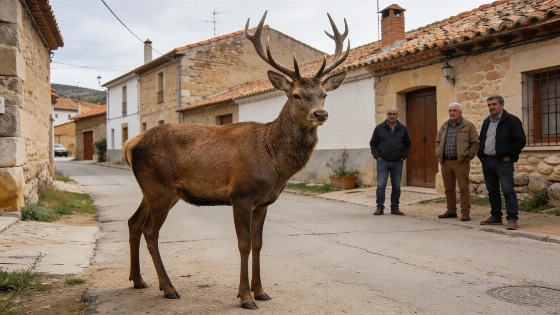
After being tranquilized and relocated 50 kilometres away to reduce risks, Tomás—a 180-kilo stag—walked back to Linarejos in less than a week. His return has delighted locals but reignited concerns about human interaction and wildlife safety.
When environmental officers sedated Tomás, a 180-kilo male deer, and transported him 50 kilometres from Linarejos to the public forest of El Casal, the goal was to protect both the animal and the villagers. Yet, just six days later, Tomás was once again seen wandering the streets and orchards of Linarejos, calmly grazing near apple and cherry trees as if nothing had changed.
Tomás has become a familiar presence in this small Zamora village, especially during the summer months. According to EFE, his comfort around people has drawn not only residents but also tourists eager for close encounters—some attempting to pet him, touch his antlers, or feed him. María José Boyano, a local, summed up the community’s concern: “Tomás is not a pet.”
Why the Relocation Happened
The decision to move Tomás came after a noticeable increase in risky interactions. With more visitors seeking selfies and physical contact, the Territorial Environmental Service intervened in mid-July. Officers calculated the tranquilizer dose for his size and relocated him to El Casal, hoping distance would discourage his return and reduce the chance of accidents. Residents supported the move, seeing it as a preventive step rather than a rejection of the animal. The challenge of balancing large wildlife, tourism, and safety is not unique to Linarejos; in other Spanish villages, such as El Recuenco, similar issues have led to different solutions, like keeping bison in controlled enclosures.
Return and New Precautions
Despite the distance, Tomás’s homing instinct proved stronger than expected. Within a week, he was back, resuming his slow walks through the village and supplementing his diet with fruit from local gardens. In response, residents posted warnings throughout the town, urging people not to approach, touch, or feed the deer, and to take photos only from a distance. These guidelines echo recommendations from the Fundación Patrimonio Natural de Castilla y León, which stress the importance of observing wildlife without disturbing their natural behavior.
The community’s main fear is that Tomás’s apparent calm could be misinterpreted as domestication. Any incident—whether an injury to a person or the animal—could force authorities to take more drastic measures. For now, the message is clear: Tomás can remain part of daily life, but only if everyone respects his space.
How Tomás Became a Local Fixture
Tomás first appeared in Linarejos in the summer of 2024, limping from a leg injury. Eloy Martín, a resident, believes the village offered him refuge from local wolves. Over time, Tomás integrated the town into his regular routes, especially outside the rutting season. Each autumn, he disappears during the “berrea”—the mating period marked by the stags’ distinctive calls—only to return in winter. If he follows his usual pattern, he will likely leave again at the end of summer.
Lessons from the Past
Tomás is not the first stag to capture the hearts of Linarejos. In 2023, another deer named Carlitos became a local symbol after being selected as a hunting trophy. Despite a petition with 50,000 signatures, Carlitos was ultimately hunted, and his silhouette now decorates village walls as a reminder. This experience has made residents especially protective of Tomás, wary that careless human behavior could lead to tragedy for both animal and people.
Stories of animals becoming part of rural life are not unique to Linarejos. In fact, the phenomenon of wildlife adapting to human presence has been observed in other parts of Spain and Europe, as seen with the return of luxury vessels to Spanish ports, such as the Al Lusail superyacht docking in Tarragona after a major refit, highlighting how both animals and people navigate changing environments.
For now, Tomás’s story is a reminder of the delicate balance between rural life, tourism, and the unpredictable instincts of wild animals. The villagers’ hope is simple: that respect and caution will allow Tomás to remain a peaceful, if unusual, neighbor.