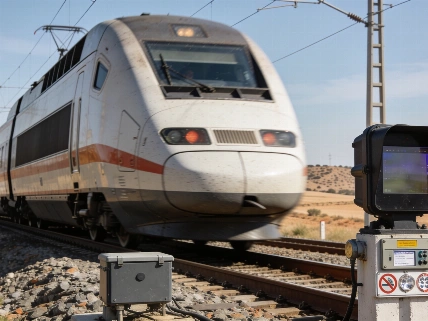
The recordings were extracted directly from Adif’s systems at Atocha station on 28 October, the day of the Urda accident. They passed through Adif’s Directorate of Railway Safety before reaching the company’s presidency and the minister’s office, then reached the press three hours later. The collision near Urda, Toledo, involved a Renfe AVE service and an Iryo train. An internal Adif incident report described by ABC records technical problems beginning at about 08:30 and the accident at 08:53.
El Debate reports that Guardia Civil investigators in Toledo have found metadata pointing to Spain’s Secretary of State for Communication, along with signs of selective distribution via WhatsApp. The finding comes from technical inquiries opened on the investigators’ initiative. It does not establish who leaked the files or how they were obtained. The recordings were communications between Atocha’s Adif control centre and the trains’ drivers. They appeared publicly on the night of 28 October, hours after the collision.
Investigators have obtained the complete original recordings from Adif’s computer systems. The Authority for the Technical Investigation of Railway, Maritime and Civil Aviation Accidents (AITAT), which took over the technical inquiry from the former CIAF, inspected the relevant Adif control post on 29 October. Its investigators reviewed telephone-message logs and video records, interviewed personnel, then obtained copies of the communications. They are comparing those files with versions published by media outlets to establish whether the audio was cut or edited. A hash check is also under way to compare the digital fingerprints of the originals and published files.
The technical review covers metadata such as the compression format and the software used to edit or export a file. Investigators are also checking creation and modification dates, along with the file name and authorship fields, where the reported trace appears. They are checking whether excerpts published by three outlets match down to the second, including their silences and cuts. Identical versions would indicate that the outlets received the same prepared material. Las Provincias reported that one communication at 08:36 involved an instruction to disconnect and reconnect the LZB safety system, then continue at normal speed.
Investigators have also requested access records to establish who opened or downloaded the recordings. The inquiry remains limited to technical checks because the judge investigating the accident at Orgaz Court No. 2 has sealed the main case. The magistrate has not yet opened a separate strand concerning an alleged disclosure of secrets. The accident investigation is examining the audio alongside the loss of LZB’s central function in the Urda area. The Adif report also described problems with transmissions and electrical power, as well as the GSM-R railway communications system.
The leak has prompted a court filing from the Sindicato de Circulación Ferroviaria (SCF), which asked on 30 October for an inquiry into its origin. El Correo reported that the union invoked Article 417.1 of Spain’s Criminal Code, concerning disclosure of reserved information by authorities or public officials. The union says the recordings should have remained in official custody and were released without sufficient anonymisation. Adif controllers have also challenged the completeness of the published audio and were preparing industrial action. UGT has announced it will report the leaks. CCOO has demanded the minister’s immediate resignation and called the leak “absolutely irresponsible,” translated from Spanish. CSIF described it as an “infamy,” also translated from Spanish. Semaf and CGT have called for an investigation. On 29 October, the Sindicato Profesional Independiente de Controladores Aéreos (SPICA) publicly rejected the release and called for measures to prevent further dissemination, citing the technical investigation and the dignity of victims and their families.
The recordings became politically prominent after Transport Minister Óscar Puente appeared at Adif’s Madrid control centre on 28 October. He criticised the decision to allow the high-speed train to continue, calling it “inexplicable” and saying it was “the origin of the accident,” both translated from Spanish. Puente said the order was given without a speed limit, although protocols require trains to proceed “at sight” at about 40 kilometres per hour. He acknowledged listening to the recordings before publication and ruled out resigning on 30 October and again on Tuesday. Las Provincias reported that Puente characterized the operator’s decision to allow the AVE to resume while the Iryo train remained stopped as erroneous.
The accident has left at least 69 people dead. El Mundo reported a death toll of 69.