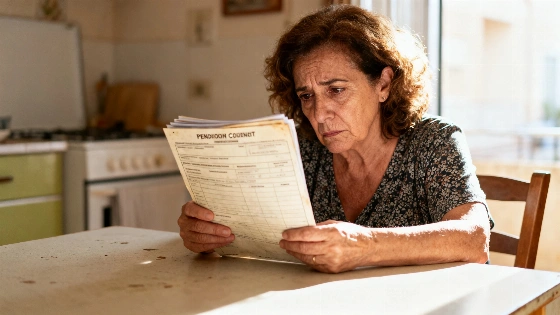
Juan, who will soon turn 80, never imagined that after nearly half a century of work, he would be living in a van. His monthly pension is €1,000, yet renting even a modest apartment in Catalonia now costs far more than he can afford.
His situation changed abruptly when a burofax informed him that his rental contract would not be renewed. Suddenly without a home, Juan began a months-long journey across Catalonia, covering more than 3,000 kilometers as he searched for a place he could afford. Despite his efforts, every apartment he found was well beyond his budget.
Struggling on a Pension
Juan started working at 14 and contributed to Spain’s social security system for 49 years. Now, his €1,000 monthly pension leaves little room for rent and other essentials, including food. He says he cannot pay more than €450 a month for housing, a figure that has become nearly impossible to find in many parts of Catalonia.
The strain shows in Catalonia’s housing figures. In the first quarter of 2026, more than 139,000 households were registered as seeking public housing, up 7.7% from 2025 and the second-highest level recorded, behind about 141,000 in 2020. Data attributed to the Agència de l’Habitatge de Catalunya and Idescat show that 63% of registered households have gross annual incomes below €14,433, while another 24% earn less than €24,055.
In areas designated as stressed housing markets, the reported average rent was €876 a month; in Barcelona, it was €1,137. The first figure would absorb nearly all of Juan’s pension before he could pay for food and utilities, let alone transport or healthcare. The Barcelona average exceeds his pension. Figures reported by La Vanguardia using housing-register and rental data show how even a steady income can fall far short of the cost of renting independently.
“I’ve spent two months living in my van, driving from town to town looking for something I can afford,” Juan explains. His age and the uncertainty of not knowing where he will sleep next add to the emotional and physical toll of the search.
Temporary Shelter, Uncertain Future
For now, a local tenants’ union has offered Juan a temporary apartment of just 32 square meters. He is grateful for the help, but wants a permanent solution that does not depend on the goodwill of others. “I don’t want to be a burden,” he says. “I just want a place I can pay for myself.”
Juan’s situation is not unique. The gap between pension incomes and market rents has left many older Spaniards in precarious circumstances. Even people with steady pensions are being priced out of the rental market, particularly if they live alone without family support.
The supply gap adds to the pressure. EsadeEcPol has reported that Spain completed about 92,000 homes in 2025, compared with roughly 260,000 a year during the 1990s. The policy center has described the imbalance as “hay más hogares que casas”, or more households than homes, pointing to the strain that arises when household formation outpaces construction.
Years Waiting for Public Housing
Juan has been on Catalonia’s public-housing waiting list for three years, but no offer has come. In the meantime, he continues to look for affordable options in smaller, less populated towns, hoping to find a stable place to call home.
Catalonia initiated 14,378 protected homes over the previous five years, intended for rental or rent-to-buy arrangements. That total is about 10.3% of the households currently registered as seeking protected housing, information from figures reported by La Vanguardia. The comparison helps explain why joining the register does not necessarily lead to a quick allocation.
“After a lifetime of work, I never thought I’d have to worry about where I’ll sleep tomorrow,” Juan says. His experience points to a broader problem: the lack of affordable housing increasingly affects pensioners, alongside young people and low-income families.
A Growing Challenge for Older Spaniards
Rising rents and a shortage of affordable housing have left many elderly people in vulnerable positions. For those living alone on limited pensions, finding a secure home can become a relentless struggle. The Institut d’Estudis de l’Autogovern has identified housing as one of Catalonia’s principal social and economic challenges, linking access to affordable homes with equality of chance and social cohesion.
The Spanish government has announced €180 million in extraordinary assistance for measures in stressed-market areas. The funding covers public-housing construction and rehabilitation, as well as land acquisition and the purchase of homes for affordable rental use. Public authorities can also cover up to 80% of the acquisition cost of an existing dwelling bought for that purpose, with the largest allocation planned for Catalonia. These measures target housing supply and emergency support, but do not guarantee an immediate permanent home for an individual applicant.
Juan remains hopeful that a solution will come, but continues to travel through Catalonia in his van, determined to find a place he can afford. His story, as reported by Talent24h, highlights the need for more accessible housing for Spain’s aging population.
According to official data, Spain’s population is aging rapidly, and the number of pensioners facing housing insecurity is expected to rise unless structural changes address the affordability gap.