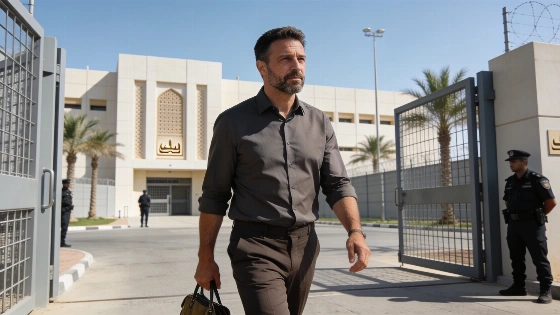
Alejandro Hamlyn, wanted in Spain for a massive VAT fraud, is out of detention in Dubai. Spanish officials never filed the extradition request, letting the high-profile businessman go free despite a major criminal case.
Alejandro Hamlyn, the Basque businessman accused of running a €154 million VAT fraud, is no longer locked up in the United Arab Emirates. He walked out of a Dubai detention center not because he won in court, but because Spanish officials missed the deadline to send the extradition paperwork.
Hamlyn is free because of government inaction. Spain’s Audiencia Nacional had an active arrest warrant for him. Interpol detained him last July. But the Spanish Justice and Foreign Affairs ministries never sent the formal request to bring him back. Legal sources told Vozpópuli that the process stalled on the Spanish side. With no paperwork, Emirati authorities had no reason to keep holding him.
Spanish prosecutors had requested a total of 89 years in prison for Hamlyn in connection with the hydrocarbons mafia case, according to El Correo.
Hamlyn spent months in a facility for extradition cases on the edge of Dubai, run by Interpol. People described the place as "quite bearable," with decent food and some comfort. It hardly matched the seriousness of the charges he faces in Spain. Still, no diplomatic request for his return ever arrived. People close to Hamlyn in Dubai said he stayed calm, as if he expected the Spanish government would not act.
The case against Hamlyn is huge. Prosecutors in Spain say he set up a large VAT fraud through a Hafesa subsidiary, his energy company, between 2016 and 2019. The investigation also names Víctor de Aldama, a well-known commission agent. Hamlyn was told to appear before a judge in May last year, but he stayed in Dubai and refused to come back to Spain. That set up the current standoff.
The failed extradition is on the Spanish government. Once a judge makes the request, the Justice Ministry is supposed to tell Foreign Affairs to handle it with the other country. This time, that process broke down. No formal request for Hamlyn’s return ever reached the UAE. Now that he is out, the chance of extradition is even lower. Unless he is detained again, Spain’s window to act is closing fast.
According to The Objective, Hamlyn was detained by Interpol in Abu Dhabi/Dubai and held for several weeks in a center for extradition cases, but was released after Spain failed to submit a formal extradition request in time. This procedural lapse now complicates any future attempt to secure his transfer to Spain, as authorities would need to detain him again.
Hamlyn’s legal problems go beyond the VAT case. He is also under investigation for allegedly bribing a police officer to destroy evidence tied to the hydrocarbons fraud. His connections run deep in Spanish politics. He has ties to Leire Díez, Javier Pérez Dolset, and lawyer Jacobo Teijelo—names linked to the so-called "cloacas," or political underworld. In February 2025, a leaked audio recording caught Hamlyn on a videoconference from Dubai. In it, Díez tried to get damaging information about UCO investigator Antonio Balas and prosecutor José Grinda, offering Hamlyn reassurances about his legal troubles in return.
Hamlyn’s reach is not just in the PSOE’s shadow networks. He grew up in Neguri, the wealthy part of Bilbao, and has kept close ties with Basque institutions. These connections reportedly helped his companies get a deferral on more than €200 million in tax payments to the Biscay provincial treasury. That raises more questions about how far his business and political influence goes.
With Spain’s failure to act, Hamlyn’s case shows a clear weakness in the country’s ability to go after high-profile fugitives abroad. The lack of coordination between judges and diplomats let a man accused of one of Spain’s biggest tax frauds walk free in another country. This case is a sharp example of how serious criminal investigations can fall apart when officials fail to move.