Galician Carnival Photoproject Highlights the Struggle to Preserve Traditions. A photography exhibition about the Galician Entroido has opened in Barcelona. The project explores how residents of Ourense are passing down carnival traditions to new generations. The exposition emphasizes the importance of cultural identity in the region.
The El somriure de l’Entroido exhibition, dedicated to the unique Entroido carnival in the province of Ourense, has opened in Barcelona. The exposition by photographer César Algora was inaugurated at the Galician Center and immediately attracted attention not only from Galicians but also from Catalan residents. The photographs showcase traditional masks, costumes, and rituals that have shaped the identity of small villages in the region for decades.
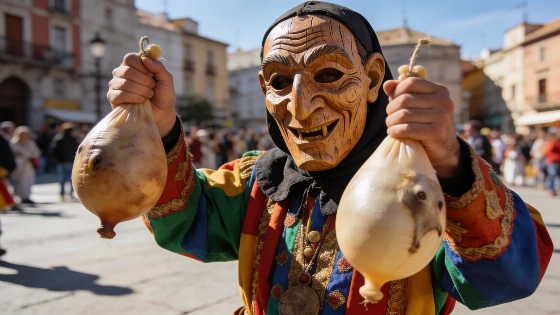
Algora’s project is the result of several trips across Ourense, including visits to Viana do Bolo, Manzaneda, Verín, Laza, and Xinzo de Limia. The photographer documented not only the vibrant processions, but also the transmission of traditions from elders to the younger generation. The series pays special attention to the images of peliqueiros, cigarróns, and other characters whose masks and costumes have become symbols of Entroido. An important detail is the use of natural materials: masks are hand-carved, and dried bull or pig bladders are used for sound effects.
According to participants, Entroido is not just a festival, but a way to escape daily concerns for a while and feel part of a special world. For many residents of Ourense, it is a family tradition that unites generations. Some costumes are passed down as heirlooms, and each mask carries its own story and significance. For example, the peliqueiro from Laza is associated with authority, while the felo from Maside is linked to humor and pranks.
Although the Galician Entroido differs from other Spanish carnivals, its popularity remains undiminished. The region preserves a strong collective memory, and participation in the festivities is seen as a duty to one's ancestors. According to locals, Entroido will not disappear as long as it is perceived as part of personal and community identity. Similar examples of preserving ancient traditions can be found in other regions of Spain—for example, the findings in the Ciudad Real necropolis, mentioned in the article about the discovery of an Egyptian amulet bearing the name of a pharaoh, also highlight the importance of cultural continuity.
For reference: Entroido is one of the oldest carnivals in Spain, with roots dating back to pre-Christian times. In Ourense, it is especially popular in February, when the streets fill with traditional parades, music, and costumed performances. In recent years, interest in the celebration has grown beyond Galicia, as evidenced by the success of the exhibition in Barcelona. Experts note that such projects help preserve intangible heritage and strengthen regional identity.