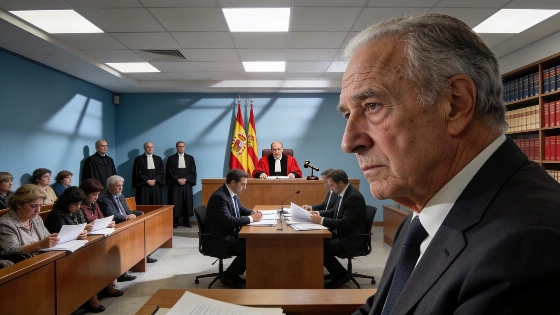
Antonio Arroyo, known as the king of fast cash, has been acquitted by Madrid’s Provincial Court. He faced charges over high-interest loans that led vulnerable families to lose their homes. The court ruled there was consent, not criminal fraud.
Antonio Arroyo, often called the king of fast cash, has once again been acquitted by the Provincial Court of Madrid after facing accusations of granting high-interest loans to vulnerable families. Despite numerous complaints from borrowers who lost their homes, the court determined that the contracts, signed before a notary and acknowledged by the borrowers, showed clear consent and did not constitute a criminal offense.
The latest case brought together around thirty affected individuals who described similar experiences: seeking urgent financial help, they were directed to Arroyo, who required them to sign loan agreements at a notary. The key condition was property ownership, allowing Arroyo to claim the home if debts were not repaid. Borrowers reported not fully understanding the terms, which included 29% interest rates and six-month repayment periods—conditions many found impossible to meet. Some also alleged that the cash or checks received were less than the amounts stated in the contracts, but the court found this claim unproven.
During the trial, Arroyo’s defense highlighted that all complainants recognized their signatures and confirmed that a notary had explained the contract terms. The judge repeatedly emphasized that there was no evidence of deception or trickery, a necessary element for criminal fraud. The presence of notaries, who were cleared of any wrongdoing during the investigation, played a decisive role in the verdict. The court maintained that the existence of a notarial document carried significant legal weight, even if some borrowers claimed limited understanding of financial terms.
Testimonies in court revealed the desperation of many borrowers, including a mother of a disabled child who turned to Arroyo after her husband’s suicide, a nurse who borrowed €5,000 and ended up owing €63,000, and a hairdresser who was forced to sell her business to settle her debt. Arroyo was tried alongside eight associates, including three family members. Two employees admitted in court that they knowingly targeted vulnerable individuals, but all defendants were acquitted of fraud and criminal organization charges.
The court clarified that while Arroyo’s lending practices were severe, they did not meet the threshold for criminal prosecution. Instead, the judges suggested that any disputes over the fairness of the contracts should be resolved in civil court, not through criminal proceedings. The ruling noted that private loans often come with harsher terms than those offered by traditional banks, especially when conventional financing is unavailable. However, the court distinguished between harsh and intolerable conditions, stating that the latter would be necessary to establish a criminal case.
Arroyo, now 72, has faced multiple legal challenges over the years, with previous cases ending in acquittal due to expired statutes of limitations, withdrawal of complaints, or the death of claimants. The involvement of notaries has consistently been a decisive factor in his favor. The most recent trial, held in February at the Provincial Court of Madrid, was marked by tension, including incidents involving Arroyo’s relatives and media crews.
Madrid’s courts have recently been at the center of several high-profile property and finance disputes, including the controversial purchase of a luxury penthouse for government use, which sparked debate over public spending. For more on this topic, see the report on the Chamberí penthouse acquisition by Madrid’s regional government.
In Spain, civil courts handle most disputes over abusive lending practices, focusing on compensation or contract enforcement rather than criminal penalties. The Arroyo case highlights the legal complexities surrounding private lending and the challenges faced by vulnerable borrowers. The verdict can still be appealed to the Supreme Court.