Egypt’s dramatic qualification for the round of 16 at the 2026 World Cup set up a meeting with defending champions Argentina in Atlanta on July 7, intensifying online debate over whether Egypt would be a comparatively less demanding opponent. Egypt had first survived a knockout match against Australia in Dallas on July 3, drawing 1-1 after extra time before winning the shootout 4-2. Australia’s Harry Souttar and Lucas Herrington missed their penalties, while Egypt converted four in a row. The win marked Egypt’s first advance from a World Cup knockout match.
Argentina’s route to the last 16 was not straightforward either. The champions faced tournament debutants Cabo Verde in Miami on July 3 and won 3-2 after extra time. Cabo Verde entered the tournament ranked 67th in the world and had held Spain and Uruguay to group-stage draws, as well as Saudi Arabia. Its difficult match against Argentina showed that title-holder status alone offered no guarantee of an easy passage through the knockout rounds.
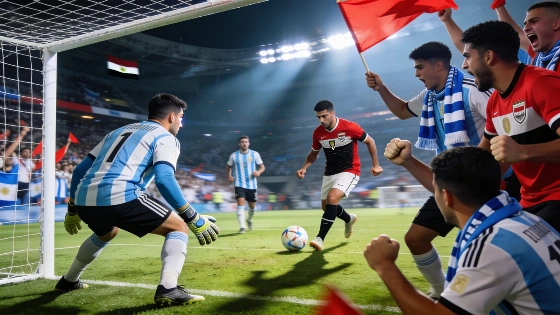
The teams’ July 7 meeting in Atlanta further complicated the idea that Egypt would be an easy opponent. Egypt led 2-0 with 11 minutes of regulation time remaining, but Argentina rallied to win 3-2 and advance to the quarter-finals. Egypt goalkeeper Mostafa Shobeir saved a Lionel Messi penalty, and Messi later struck the post. The Associated Press reported that Argentina was “trailing 2-0 with 11 minutes of regulation time to play” before completing the comeback. The scoreline and late Egyptian lead made for a close contest, not evidence of a clear gulf between the sides.
The match also generated formal disciplinary fallout. FIFA imposed three-match suspensions on Egypt head coach Hossam Hassan and team manager Ibrahim Hassan, and a five-match ban on player Mostafa Ziko. The sanctions followed incidents connected with Egypt’s elimination, and the Egyptian Football Association said it planned to appeal. The federation had also raised concerns about referee François Letexier’s decisions, including a disallowed Egyptian goal and an alleged penalty-area incident before Argentina’s stoppage-time winner.
The debate over a potentially favorable matchup gave way to a tightly contested knockout tie. Egypt reached the last 16 by winning a penalty shootout, then pushed the reigning champions to the brink, while Argentina advanced only after overturning a two-goal deficit. Those results show how quickly a World Cup bracket can unsettle expectations and why a team’s reputation or title-holder status alone cannot determine the difficulty of a knockout opponent.
The conversation echoes similar debates from previous tournaments, when draws and matchups influenced expectations and strategies. For instance, the recent clash between Switzerland and Algeria in Vancouver drew attention for its high stakes and the pressure on both teams to reach the round of 16, as highlighted in this report on Switzerland's World Cup campaign.