Foreign drivers who cannot exchange their home licences are increasingly learning in automatics in A Coruña. The easier lessons come with a lasting restriction: code 78 excludes manual cars.
Code 78 is the trade-off: anyone who earns a Spanish driving licence in an automatic car cannot use it to lead a manual vehicle. In A Coruña, that restriction has not stopped more foreign learners from choosing automatic lessons.
Many already hold a licence from their home country, but cannot exchange it in Spain and have to start the process again. Uzal says they generally complete the theory component before choosing an automatic for practical training.
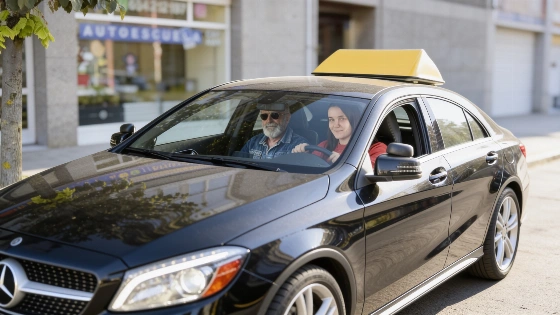
Luis Rodríguez of Autoescuela D&T says automatic cars make lessons much easier and can reduce the number of hours needed. With a manual, learners must divide their attention between operating the car and following the road. An automatic lets them focus more on traffic around them, including signals and pedestrians, he says.
For private use, Rodríguez considers the restriction manageable. Work can be different: companies frequently have manual cars and vans, which a driver holding an automatic-only licence cannot lead.
Jesús Barroso, a 33-year-old student at the school, moved to A Coruña for family reasons; his father is from the area. He has a Venezuelan licence that cannot be exchanged in Spain. He says he had not driven in Venezuela and chose an automatic because he expected a manual car to make learning more difficult. His father has always had automatics.
Barroso says he has completed around 20 practical lessons and feels he has made large progress. He still needs to work on parking, while practising road priorities and speed control. He says the automatic gives him more confidence and lets him pay closer attention to what is happening around the car.
The employment drawback matters as other changes put driving work in focus. Madrid robotaxi trials are being prepared by Waymo and Uber, while their effect on Spanish driving jobs remains unclear. The programmes are separate projects: Uber’s trial uses 20 WeRide GXR vans, with safety operators aboard, in areas including Hortaleza and Arturo Soria. Waymo announced on 20 October 2026 that it was preparing a fully autonomous ride-hailing service for 2027. Testing and validation will begin in Madrid, with further testing planned in Alcobendas and Getafe. Its reported process starts with specialist drivers learning local traffic conditions. Autonomous testing follows, with a person supervising inside, before the company envisages fully autonomous operation at a later stage. The trials fall under the DGT’s Level 4 public-road testing structure, Instruction VEH 2025/07; authorization to test is distinct from approval to run paid driverless passenger services.