Three live pedestrian-impact crash tests are scheduled for the opening day, along with trials involving personal mobility vehicles. The tests will use modern vehicles and advanced anthropomorphic dummies to examine possible injuries and help prevent and reconstruct accidents. The congress programme also includes two pedestrian-impact tests and a collision test involving a personal mobility vehicle and a car.
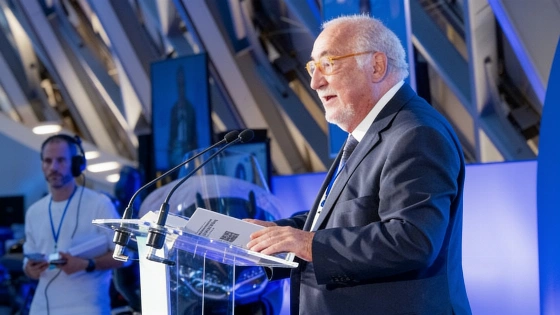
The practical demonstrations are part of the second International Congress on Traffic Accident Investigation, organised by Cesvimap and EVU Spain (European Association for Accident Research and Analysis). It will take place from 25 to 27 November at Cesvimap’s facilities in Ávila, Castilla y León, with conference sessions later at the Palacio de Exposiciones y Congresos in Ávila. The congress will focus on vulnerable road users. Its intended professional audience includes insurance claims specialists, experts, lawyers, medical professionals and adjusters.
Over the three days, specialists will examine methods for reconstructing road collisions and assessing evidence. The programme focuses on vulnerable road users, event data recorders (EDR) and biomechanics, as well as legal questions arising from changing mobility patterns. Spain recorded 1,853 road-traffic deaths in 2024, according to the National Statistics Institute (INE). The total included 383 pedestrians, 88 cyclists and 501 motorcyclists; 54% of pedestrians killed were aged 65 or older. The 2024 figure was 1.4% higher than in 2023.
Sessions will cover 3D digitisation and Gaussian Splatting, which can reconstruct detailed three-dimensional scenes from photographs and digital captures. Other presentations will examine how EDR data and multi-body models can help analyse collisions involving vulnerable road users. Under EU Regulation 2019/2144, EDRs record information from shortly before, during and after a collision, including vehicle speed, braking, position and tilt, and safety-system activation. The regulation also requires the recorders to be non-deactivatable and protects their data against manipulation and misuse.
The programme also covers vehicle speed and electronic records of driving manoeuvres. Presenters will examine digital tools for analysing pedestrian collisions, the limits of artificial intelligence in accident reconstruction and legal issues linked to new forms of mobility. EU rules restrict national authorities’ access to EDR data to specified purposes, including accident research and analysis and type approval, subject to data-protection requirements. A separate UN framework, Regulation No. 169, sets approval provisions for event data recorders in heavy-duty vehicles.
Research on pedestrians and cyclists will examine whether collisions could have been avoided and how driver visibility changes at night. Other work will consider the biomechanical mechanisms involved in crashes with electric scooter users. The programme combines practical tests with presentations, round tables and technical workshops. Results from the opening-day tests are scheduled for discussion on the final day.
Technology companies and partner organisations will lead specialist workshops, while networking sessions are intended to support professional collaboration. The congress’s practical format differs from the negotiated rules of Spain’s election debates, covered in earlier debate coverage.