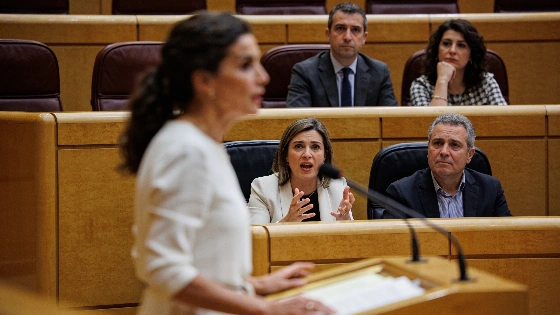
Mar Espinar, the PSOE spokesperson in Madrid’s regional assembly, urged Isabel Díaz Ayuso to resign over her handling of care homes during the pandemic. Espinar cited 7,291 elderly people who, she alleged, had died without care, and accused Ayuso of failing to explain or confront the suffering of care-home victims. Ayuso rejected the criticism and called her opponents “miserable,” translated from Spanish, as the chamber grew louder. She remained regional president after the opposition demand.
The exchange took place on 5 November during a Thursday session that covered education strikes and public universities. It also addressed the resignation of former transport minister Óscar Puente after a railway accident. Espinar said Puente had accepted responsibility despite having no legal responsibility, then accused Ayuso of refusing to face the pain caused by the care-home deaths. She made the resignation demand directly to the regional president, linking the debate over Puente’s departure to Madrid’s continuing dispute over pandemic care-home policy.
Ayuso turned to the education stoppage, describing it as “mafia corruption” by unions allegedly funded with public money, according to her remarks in the assembly. She also claimed that far-left activists were driving the strike and that teachers had used classroom materials to build street barricades. Those were Ayuso’s accusations, not independently established facts.
The education dispute widened as staff and students at Madrid’s six public universities joined a two-day strike over funding and staffing, amid deteriorating facilities. The institutions are Complutense, Autonomous, Polytechnic, Carlos III, Alcalá and Rey Juan Carlos. Their action followed a March 2025 agreement between the regional government and university rectors projecting €14.8 billion in funding through 2031. Strike organizers said public-university investment stood at 0.4% of regional GDP, compared with a national average of 0.75% and a European average of 0.92%, and called for it to reach 1% by 2031. Más Madrid spokesperson Manuela Bergerot said the universities had stopped work to protest what she called fraudulent funding and backed a nationwide general strike planned for 11 November. CCOO and UGT framed that 24-hour action around wages and housing, as well as equality and public services; more than 3,600 union committees and sections had endorsed it. Bergerot also argued that growing fortunes among the wealthy contrasted with the struggles of people trying to pay rent.
Ayuso answered the opposition’s resignation demand by asking why Pedro Sánchez should not resign if Carlos Mazón had done so. She accused Sánchez of spending railway funds on prostitutes and using appointments to place lovers and party activists. These claims formed part of her political attack; the source material provides no supporting evidence for them.
Earlier, Vox leader Isabel Pérez Moñino had called Puente “the butcher of Urda and Adamuz,” translated from Spanish, before asking about public transport management in Madrid. Ayuso replied that half of the transport budget went to maintenance intended to prevent such incidents. She did not address Moñino’s insult.
The session closed with another attack from the PP bench. Its spokesperson, Carlos Díaz-Pache, described “Sanchismo” as “an absolute sewer,” translated from Spanish.