Andalusia Blocks Access for Hazardous Waste from Other Regions: Redistribution of Flows. Andalusia has imposed strict restrictions on accepting hazardous waste from other regions. Plants in Valencia, Madrid, and the Canary Islands are now forced to seek new, more expensive routes for the disposal of toxic materials.
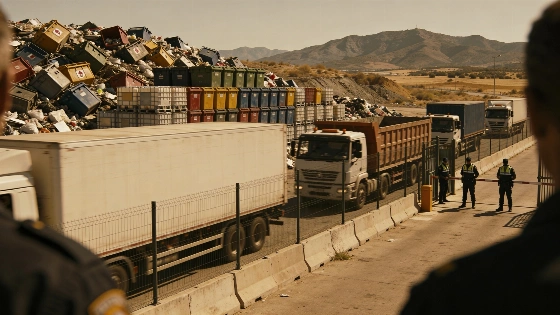
Since spring, Andalusia has enforced a complete ban on the reception and burial of hazardous industrial waste from other regions of Spain. This decision by the regional government has already changed the usual routes for transporting toxic materials: now, companies in Valencia, Madrid, Murcia, the Canary Islands, and Extremadura are forced to seek alternative disposal options, often in more remote and expensive northern regions of the country.
According to the industry association Asegre, around 100,000 tons of hazardous waste are annually redirected to other sites, leading to increased costs for businesses. Exceptions are made only for certain batches from Ceuta and Melilla, as well as waste that can be recycled and returned to circulation. As a result, for example, the Canary Islands are already facing difficulties in exporting asbestos-containing materials: in 2024, the region sent 4,200 tons of such waste to the mainland, but after the closure of Andalusian landfills, there is a shortage of accessible routes.
Authorities in the Canary Islands acknowledge that finding new disposal sites is extremely difficult: most regions are unwilling to accept outside waste, and attempts to create their own facilities face protests from local residents. Other regions without their own hazardous waste processing capacities are facing similar problems.
The tightening of regulations in Andalusia was prompted by a high-profile incident in 2022, when 30,000 tons of contaminated pellets and soil were shipped by sea from Montenegro to the port of Nerva (Huelva). Following this, regional authorities amended the circular economy law to stop Andalusia from becoming a 'waste cemetery' for other regions and countries. According to official data, during that period the region generated 300,000 tons of its own hazardous waste, but received up to 850,000 tons from other areas, including the United Kingdom and Italy.
Currently, companies in Valencia, which send 458,000 tons of waste each year for processing in other regions, are now forced to transport it to more distant locations — for example, Toledo or Galicia. This increases transport and operational costs by 25–80 euros per ton, directly affecting production costs and company competitiveness.
Environmental organizations, including Ecologistas en Acción, supported the decision of the Andalusian authorities, though they believe exceptions for certain regions make the law too open to interpretation. At the same time, industry representatives point to a contradiction between regional restrictions and the principle of geographic proximity established in the national waste legislation. According to Asegre, the new rules create artificial barriers within the country and do not solve the problem of exporting Andalusia's own waste.
The issue of hazardous industrial waste processing remains acute throughout Spain. There are only about ten specialized facilities operating in the country, and their placement often provokes protests from local residents. For example, attempts to build new plants in Badajoz have repeatedly been blocked at the municipal level. In addition, according to the National Institute of Statistics, in 2023 the volume of hazardous waste in Spain amounted to 3.3 million tons, which is 3.8% less than the previous year. The main types are chemical compounds, mineral residues, and equipment beyond repair.
Oversight of such facilities also raises concerns: inspections are often conducted according to a prearranged schedule, and in case of incidents, information does not always promptly reach emergency services. Against this backdrop, the issues of safety and transparency in the sector remain in the spotlight, as was the case with the tragedy at sea off Huelva, when the deaths of Civil Guard officers exposed problems in interagency coordination.
The creation of new hazardous waste processing capacities requires significant investment and lengthy approvals, while the choice of a site often becomes a sticking point due to residents' protests. As a result, many regions find themselves in a situation where waste removal is becoming increasingly difficult and expensive, and the national recycling system is under serious strain.