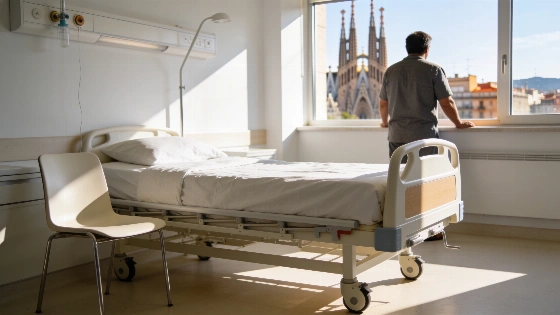
Alejandro arrived at the Hospital del Mar after a drug-related psychotic episode. He says he has now been drug-free for two months at the centre, where people without homes can recover in a safe setting.
The unit tackles obstacles that can make treatment difficult to sustain. Sleeping rough raises exposure to cold and other risks, while maintaining medical treatment and avoiding readmission can be harder without stable accommodation. Fundació Arrels estimates that 42% of people without homes have health problems; their life expectancy can be up to 34 years below that of Spain’s general population. Arrels counted 1,982 people sleeping outdoors in Barcelona in December 2025, 43.2% more than in its 2023 count. Municipal figures put the number at about 2,190 in October 2026.
Hospital del Mar created the Unidad de Recuperación para Personas en Situación de Sinhogarismo with a social and multidisciplinary approach. Laura Morro, head of the hospital’s social recovery unit for people without homes, told TVE that staff develop an individual plan with each person, based on how they want to improve their lives. Building trust and providing a safe place are central to that work. The model complements Barcelona’s municipal CRI Galena, which has operated since April 2020, providing 45 places year-round for homeless adults with problematic drug or alcohol use. The centre provides accommodation and meals, along with healthcare and social assistance. It also runs harm-reduction programmes and supports social and labour reintegration; the city says it has assisted more than 800 people.
Patients can also get help with documentation and medical treatment, including support to stay in contact with healthcare teams and arrange appointments. Luz, a foreign woman staying at the centre, said she felt supported by staff, while José Antonio described having previously struggled with breathlessness and a persistent cough. Alejandro said addiction was especially difficult to manage while living on the street. A separate account documented a six-month wait for a priority neurology appointment at a private hospital in Móstoles, another access problem described in an earlier hospital report.
Arrels has also reported that 682 people who were living or had previously lived on the street died in Barcelona over a ten-year period. In its analysis, two out of three people who died while living on the street were younger than 55, and half of the deaths were attributed to medical causes. Fundació Arrels director Beatriz Fernández said immediate needs often take priority over health when someone is sleeping rough, including finding food or somewhere to stay. Alejandro described street life as miserable and said the centre had given him hope for the future.