Benidorm now commemorates Otto von Habsburg, the last Austro-Hungarian heir, with a street in his name. His discreet life in Spain, friendship with Franco, and unique legacy continue to spark interest.
Benidorm has officially recognized Otto von Habsburg, the last heir to the Austro-Hungarian Empire, by naming a street after him. The avenue, branching from Severo Ochoa, marks the city’s connection to a figure whose life intertwined with Spain’s own turbulent 20th-century history. Otto, who once held titles ranging from King of Bohemia to Grand Duke of Transylvania, spent years quietly vacationing in Benidorm, far from the imperial courts of his ancestors.
Otto’s presence in Spain was more than a footnote. After renouncing any claim to the throne in the 1960s to regain Austrian citizenship, he chose to settle in Bavaria but maintained strong ties to Spain. His villa in Benidorm was insured by Unión y el Fénix, a detail fondly recalled by locals and former employees. The archduke’s relationship with the city was so enduring that residents affectionately called him “Pototo,” a nickname that stuck despite the complexity of his full title.
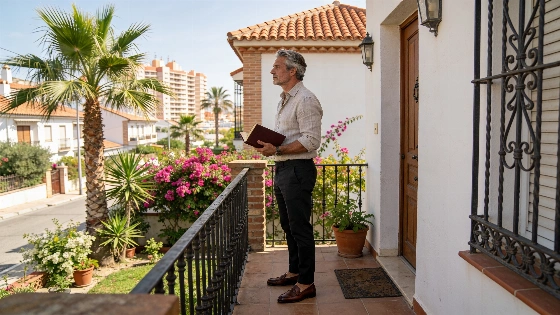
Personal accounts from Benidorm journalist Juan Díaz Ortuño reveal Otto’s close friendship with then-mayor Pedro Zaragoza, known for persuading Franco to allow bikinis on local beaches—a move that transformed Benidorm’s tourism. Otto was remembered for his approachable manner, deep knowledge, and habit of greeting guests with a book in hand. Despite his strong accent, he communicated effectively in Spanish and became a familiar figure in the community.
The Habsburg succession was marked by tragedy and political upheaval. Otto’s path to becoming the imperial heir was shaped by the deaths of Rodolfo and Francisco Fernando, the latter’s assassination in Sarajevo sparking World War I. The collapse of the empire in 1918 forced Otto’s family into exile, with his father Carlos I’s brief reign ending as the monarchy dissolved. Otto’s own life was spent across Europe, with significant periods in Belgium, Madrid, and the Basque Country before his marriage to Regina de Saxe-Meiningen in 1951, after which Benidorm became a regular destination.
Otto’s political influence extended beyond nostalgia for monarchy. He served as a Member of the European Parliament for the Christian Social Union of Bavaria for two decades and was known for his strong Catholic convictions and anti-communist stance. His relationship with Franco was complex; while both shared conservative values, Otto opposed Hitler and the Nazi annexation of Austria, a stance that set him apart from Franco’s wartime alliances. According to historian Matilde Eiroa San Francisco, Otto often provided confidential reports and analyses directly to Franco, shaping the dictator’s understanding of international affairs.
Documents from the Fundación Francisco Franco highlight Otto’s unique political role in Spain, though the foundation’s current legal challenges have cast new light on its activities. The archduke’s legacy is further complicated by his efforts to balance his European vision with personal ties to Spanish leaders. His final resting place is the Capuchin Crypt in Vienna, among more than 140 Habsburgs, though some in Benidorm believe a Mediterranean grave would have suited him better—ideally, one still protected by his trusted insurance company.
Otto von Habsburg’s story illustrates the enduring connections between Spain and Central Europe, as well as the personal histories that shape public memory. The city’s tribute comes at a time when Spain continues to reflect on its own past, including the legacy of Franco’s era and the evolving role of monarchy. For context on how Spain’s institutions respond to historical and political pressures, recent events in Ceuta have also highlighted the delicate balance between tradition and modern governance, as seen in the government’s handling of migration and royal protocol: the debate over the King’s response to the Ceuta crisis remains a vivid example.
Today, Benidorm’s recognition of Otto von Habsburg serves as a reminder of the city’s unique place in European history. The archduke’s life, marked by exile, adaptation, and quiet influence, continues to resonate in Spain’s collective memory, bridging imperial legacy and local tradition.