The tunnel’s first half-hour of traffic brought 27 vehicles and 70 people into Spain on 9 October 1976. Five cars carrying 17 people travelled north in the same period, an early sign of demand for a direct crossing through the central Pyrenees. The 3,070-metre tunnel links Aragón with France through the Valley of Aure.
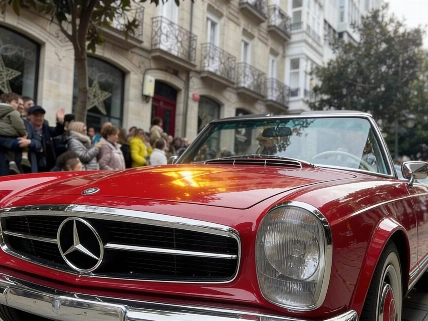
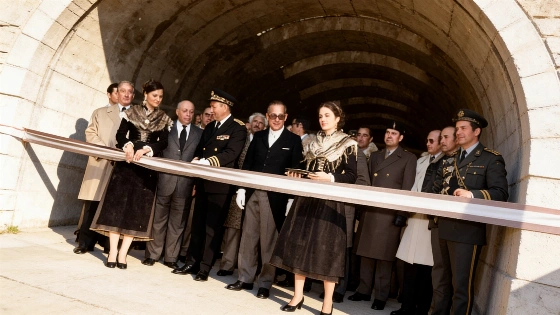
Traffic began nearly a month before the official inauguration on 5 November. José Vidaller and his family were first to drive towards France in a Seat 124. A Land Rover followed, then a Seat driven by José María Martínez. The first vehicle to enter Spain from France was journalist Louis Millet’s car, arriving from Tarbes.
By midday, 85 cars had entered Spain and 19 had left. French visitors quickly filled Aínsa’s hotel rooms, and restaurants saw large orders, with paella especially popular. The tunnel also shortened journeys between the Sobrarbe and the French Valley of Aure, supporting tourism and trade while increasing pressure to improve local roads, including the Eje del Cinca.
Crossing the border still involved passport visas and customs inspections. Officials also checked the international green card insurance certificate. A later Mossos checkpoint report describes a road control focused on lorry-driver hours, a different concern from the formal border checks required in 1976.
The project grew out of cooperation between local councils. Roque Gistau of Bielsa worked with Vicente Mir of Saint-Lary-Soulan. Jean Pichon of Aragnouet was also involved; Mir, who came from Serveto, was an early advocate. The foundations were laid at a meeting on 20 June 1961, following a 1960 visit by Spanish Public Works Minister Jorge Vigón. The Franco-Spanish construction agreement was signed on 30 March 1962, and physical work began in 1967.
Bielsa’s council backed a 30-million-peseta loan to fund the project, with a sawmill helping to raise the money. The Franco-Spanish agreement was approved on 30 March 1962 by the International Commission of the Pyrenees. Work went to the Spanish-French company Aete-Tegsa and began in 1967. Excavation broke through on 19 October 1968, while final-gauge boring was completed by the end of 1970. Around 22,000 cubic metres of concrete reinforced the vault. José Méliz later recalled that local councils also had to contribute their own resources to build the access roads.
On opening day, André Puj, a journalist from Bagnères-de-Bigorre and Tour de France representative, crossed the pass to examine the possibility of a cycling stage between Huesca and Saint-Lary. Spanish anniversary coverage described it as Spain’s first road tunnel through the Pyrenees and, at the time, its highest such route.
Since 2008, the tunnel has been jointly managed by the Department of Hautes-Pyrénées and Aragón under a Franco-Spanish arrangement. The system provides winter maintenance on both approaches and keeps the route open year-round, replacing the earlier pattern of snow-related seasonal closures. The crossing now carries roughly 1,000 vehicles a day, including around 60 to 70 trucks on working days.