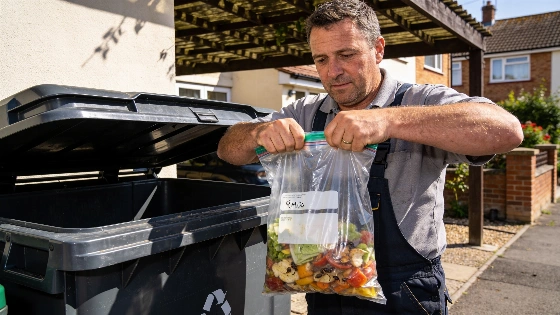
A UK waste collector known as The No.1 Binman has outlined four practical methods to stop maggots from appearing in household bins. His advice focuses on reducing odors, blocking flies, and handling food waste more effectively. These tips are gaining attention as warmer weather brings new challenges for home hygiene.
When temperatures rise, household bins can quickly become breeding grounds for maggots. Ashley, the waste collector behind The No.1 Binman, has shared four straightforward strategies to help households avoid this unpleasant problem. His advice, based on daily experience, targets the main causes of infestations: strong odors, heat, and easy access for flies.
The first recommendation is to double-bag food waste, especially items with strong smells. Placing leftovers in two tightly sealed bags, with the air pressed out before tying, helps contain odors and makes it harder for flies to detect and reach the contents. This simple step is particularly effective when waste will sit for several days before collection.
Location also matters. Ashley suggests keeping bins out of direct sunlight whenever possible. Heat accelerates decomposition and intensifies smells, attracting more flies. If no covered area is available, even placing the bin under a chair or in a shaded corner can make a difference. Just as important is keeping the lid closed at all times. Flies lay eggs in accessible bins, and a closed lid forms a crucial barrier. According to the University of Minnesota, fly larvae—maggots—emerge from eggs laid on decomposing food, so blocking entry is essential.
For those willing to go a step further, Ashley recommends freezing food scraps until collection day. While some may hesitate to store waste in the freezer, this method prevents decomposition and eliminates the window for flies to lay eggs. On collection day, frozen scraps can be transferred directly to the bin, minimizing exposure and odor. These measures can be combined or adapted to fit each household's routine and available space.
If maggots do appear, Ashley's advice is to sprinkle table salt directly onto the larvae and affected areas. Salt dehydrates and kills maggots without the need for chemical cleaners. Cleaning expert Claire from Sister Pledge Cleans supports this approach, noting that salt also dries out fly eggs and absorbs lingering moisture and odors that attract new insects. No specific amount or waiting time is required—just a generous application to the problem spots.
Even homes that separate waste and bag food carefully can face infestations, especially during hot spells. The key, Ashley emphasizes, is a mix of daily prevention and quick action if maggots are spotted. These practical steps are gaining traction as more people look for effective, low-effort ways to keep their bins clean and pest-free.
Interest in bin hygiene has grown in recent years, with stories like the rise of an 11-year-old Canadian entrepreneur who built a successful bin cleaning business after facing initial rejection, as reported in this feature on young innovators in waste management. As summer brings new challenges, simple routines and a bit of vigilance can make a noticeable difference in home comfort and cleanliness.