Rodalies in Catalonia is battling a spike in cable theft, vandalism and suicides. Authorities plan to transfer key lines to regional control. Delays and infrastructure issues remain widespread.
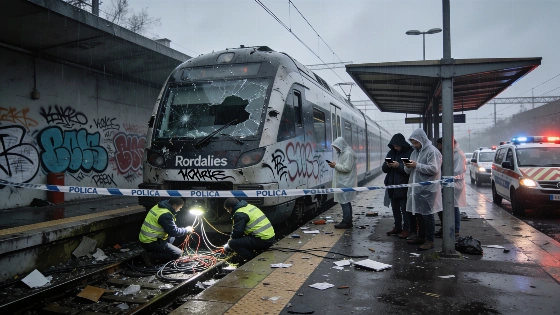
Catalonia’s Rodalies commuter rail system is facing a surge in external disruptions, with cable theft, vandalism and a high rate of suicides on the tracks driving persistent delays and operational headaches. Òscar Playà, CEO of Rodalies de Catalunya, outlined the scale of the crisis at a recent rail policy event in Barcelona, highlighting that cable theft has doubled compared to last year and that the region now leads Spain in rail-related fatalities, with suicides accounting for nearly all such incidents.
Playà described how graffiti and vandalism continue to affect both trains and infrastructure, forcing the company to intensify cleaning efforts to reduce the number of out-of-service trains. He also pointed to a series of technical failures, including broken catenaries, landslides and trees blocking tracks, which have contributed to Rodalies’ reputation for frequent delays. The company is now working with the Department of Health and Adif to close off the most accident-prone sections of track in an attempt to reduce the number of incidents.
The Generalitat is preparing to take over the R1 line, which runs from Molins de Rei to Maçanet-Massanes via Barcelona and the Maresme, in the coming months. Pere Macias, the commissioner for the Rodalies transfer, confirmed that after the R1, the R3 and R2 Sur lines will also be handed over to regional control. The R3, which connects L’Hospitalet de Llobregat with Puigcerdà and La Tor de Querol, has been particularly problematic, suffering from extended closures due to infrastructure works and repairs. The R2 Sur, linking Sant Vicenç de Calders with Barcelona’s Estació de França, is next in line, followed by the R4 Nord and sections serving Tortosa and the airport.
Despite the formal creation of Rodalies de Catalunya, Playà remains its sole employee, with the company’s main goal now focused on improving service and completing the transfer process, which is expected by 2028 once the necessary railway license is secured. The company has already advanced its business and strategy plan, and Playà noted that early signs of recovery are emerging after the major crisis triggered by the Gelida accident in January.
Àngel Contreras, deputy director for Adif in eastern Catalonia, recalled that following the Gelida incident, more than 1,000 kilometers of track were inspected in just two months—a process that would normally take two years. Over 690 site checks were carried out, mainly on embankments and slopes, involving more than 400 personnel. Temporary speed restrictions peaked at 216 but have since dropped to 135, though Contreras stressed that the real issue is the overall state of the network and the ability of trains to keep to schedule. He also mentioned that a project to double the Garraf tunnel is now underway.
Financially, the R1 line alone faces an annual fixed cost of €17.08 million, with recommended yearly investments of €33.39 million. The accumulated investment deficit for the line is estimated at €460 million, underlining the scale of the challenge facing the Generalitat as it assumes greater responsibility for the network. The need to replace aging rolling stock is also pressing, with 129 trains from the 447 series set to become obsolete by 2030.
These developments come as Catalonia continues to grapple with broader issues of public safety and infrastructure management. For example, the region’s challenges with illegal home occupations have also drawn national attention, as detailed in a recent report on how Catalonia accounts for a disproportionate share of such cases across Spain. More on this can be found in the analysis of Catalonia’s role in Spain’s illegal home occupation statistics.
For those affected by the mental health crisis reflected in the high number of suicides on the railways, several helplines are available, including 024, the Esperanza line (717 003 717), WhatsApp (666 640 665), and the ANAR Foundation (900 20 20 10).
Rodalies’ ongoing difficulties highlight the complex interplay between infrastructure, public safety and regional governance in Catalonia. As the Generalitat prepares to take on more direct control, the effectiveness of these measures will be closely watched by commuters and policymakers alike.