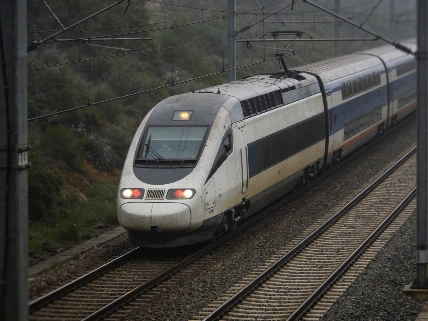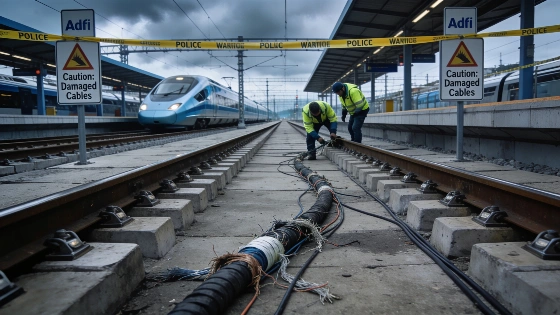
A new cable theft at Barcelona’s La Sagrera station has disrupted high-speed train services between the city and Girona. Adif, the rail infrastructure manager, says technical teams are working urgently to address the disruption but has provided no timeline for full restoration. The incident has taken a basic section of the high-speed network out of service, affecting thousands of daily commuters and travelers.
This latest theft came just one day after a separate cable robbery caused major fires and extensive damage to railway infrastructure between Lleida and La Plana-Picamoixons (Tarragona). That earlier incident has kept regional train lines R13 and R14 suspended. Adif has warned that repairs will be complex and could take several days because of the severity of the damage. The affected systems are critical to train regulation and safety, making restoration particularly challenging.
Authorities in Catalonia have condemned the thefts. Sílvia Paneque, the regional minister for Territory, Housing and Ecological Transition, said the Generalitat would pursue those responsible for copper cable thefts “relentlessly.” She pointed to the growing trend of such crimes in the region and the presence of organized groups behind the incidents. Paneque also noted that the Mossos d’Esquadra are taking decisive action, while the national government is considering tougher penalties for thefts targeting railway infrastructure.
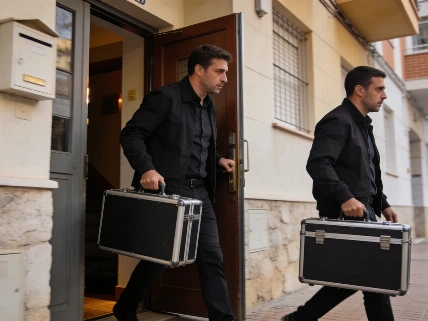
The response targets outlets that may receive stolen metal alongside patrols along railway lines. On 21 October 2026, the Mossos d’Esquadra announced that officers had recovered 55 kilograms of copper allegedly stolen from the railway network during two simultaneous inspections at a waste-management facility in Sant Andreu, Barcelona. The inspections were conducted under Pla Via, a joint Mossos and Adif operation launched in July 2026. The police’s Àrea Regional del Transport Urbà opened an investigation to identify the person who sold the copper. Labour authorities also detected an alleged breach of workers’ time-recording obligations. Since the plan began, police had carried out 20 inspections of waste managers in Barcelona.
By mid-October, Mossos had reported 38 arrests in Catalonia linked to suspected railway-copper theft since Pla Via’s launch. Two people were remanded in provisional custody, while courts imposed orders barring three others from railway infrastructure; six more people were reported or investigated. Separately, figures attributed to Adif and reported by 3CatInfo indicated 77 cable thefts in Catalonia during July and August 2026. August accounted for 45 complaints, and the reported year-to-date total reached 229 by the end of that month. Such incidents can disrupt schedules and lead to cancellations or route changes. Adif and Mossos have increased surveillance, while selected cable chambers have been reinforced with concrete and some sections closed. These measures cannot be applied across the entire network.
Official data indicates that half of all cable thefts in Spain occur in Catalonia, often resulting in indefinite service suspensions on affected routes. Regional and commuter services are also vulnerable, creating widespread inconvenience for passengers and operational challenges for rail operators. The scale of the problem has prompted calls for stronger security and legislative changes to deter future incidents.
Railway infrastructure theft is not unique to Catalonia, but the region has seen a marked increase in recent years. Valuable copper and the complexity of the rail network make these crimes both lucrative and disruptive. A separate Mossos investigation reported in October involved a group accused of 12 robberies at wind parks in Catalonia, the Valencian Community and Aragon, with four arrests. Investigators said the group targeted high-voltage cable, copper busbars and related components, and that a recycling centre was allegedly used to introduce stolen material into the market. The case shows that copper theft and resale can extend beyond railway infrastructure. As authorities intensify their response, the situation echoes broader debates about urban security and infrastructure protection, including concerns raised in Valencia over the fate of major city landmarks, as discussed in recent coverage of the Mestalla stadium controversy.
Spain’s rail system is among the most extensive in Europe, with high-speed AVE lines connecting major cities and regions. Cable theft disrupts travel and strains maintenance resources, leaving critical infrastructure exposed. Pla Via’s inspections and arrests form part of an ongoing security effort, while repeated disruptions continue to affect passengers and operators. As repairs continue, passengers are advised to check for updates and expect possible schedule changes in the coming days.