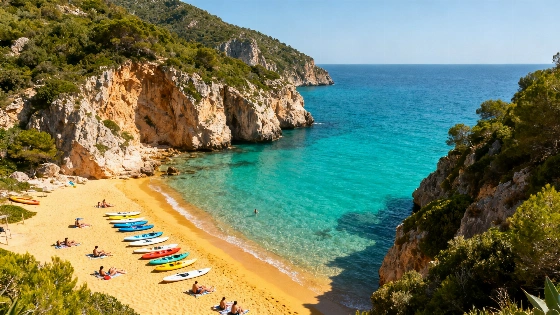
Cala Rijana, tucked beneath a highway tunnel on Granada’s Costa Tropical, offers turquoise waters and dramatic cliffs that rival the Caribbean. Its unique setting and pristine marine life make it one of southern Spain’s most sought-after summer escapes.
Just off the A-7 highway, beneath an unremarkable concrete tunnel, lies Cala Rijana—a stretch of sand and turquoise water that feels worlds away from the busy roads above. This small cove, hidden on the Costa Tropical near Gualchos-Castell de Ferro, has become a magnet for those seeking a slice of the Caribbean without leaving Andalusia.
Access to Cala Rijana is discreet. A modest sign on the N-340 marks the start of a short pedestrian path, leading through a tunnel beneath the road. The descent is brief but steep, and the reward is immediate: a 250-meter-long beach framed by rugged cliffs and crystal-clear sea. Arriving early is essential, as the limited space quickly fills with visitors eager to claim a spot on the sand and capture the view for social media.
Natural Beauty and Marine Life
Cala Rijana’s appeal goes beyond its scenery. The water here is exceptionally clear, revealing every pebble and darting fish beneath the surface. The cove’s sheltered position, protected by rocky outcrops, keeps waves gentle and creates ideal conditions for swimming and snorkeling. Even beginners can spot schools of fish weaving through underwater meadows, while more experienced divers are drawn by the gradual depth and calm currents.
The area is also home to a variety of wildlife. Falcons and yellow-legged gulls circle overhead, and mountain goats are a common sight on the surrounding slopes. The cove’s compact size and lack of large-scale development help preserve its wild character, though a small beach bar and equipment rentals for paddle surfing and kayaking are available during the summer months.
Getting There
Reaching Cala Rijana from Málaga is straightforward. Drivers should follow the A-7 towards Motril, then take exit 883 for Carchuna and Calahonda. From there, the N-340 hugs the coastline, and a designated parking area marks the start of the footpath to the beach. The walk from the car park to the sand takes about five minutes. While public transport is technically possible, infrequent schedules and distant stops make driving the more practical choice, especially for those bringing coolers or umbrellas.
Nearby Beaches Worth Exploring
For those looking to extend their day, nearby Calahonda offers easy access and dark sand, making it popular with families. The contrast between the black gravel and clear water creates striking photographs. Further west, about fifty minutes by car, Cantarriján beach is known for its split personality: one side is textile, the other naturist. The pebbly shore can be tough on bare feet, but water shoes solve the problem and allow visitors to enjoy the tranquil, uncrowded swimming areas.
Tips for a Better Visit
To make the most of Cala Rijana, arrive early and avoid the midday rush. Wear comfortable shoes for the steep path, and bring a bag to carry out your rubbish—preserving the cove’s natural state depends on responsible visitors. Renting a kayak or paddleboard is a worthwhile way to explore nearby caves and hidden inlets at your own pace. Drivers should also watch for mountain goats, which often cross the road unexpectedly.
Cala Rijana’s blend of wild beauty and accessible adventure has secured its place as one of the Costa Tropical’s most coveted summer destinations. Its popularity is a reminder of how even the most unassuming corners of Spain can offer moments of escape and discovery.