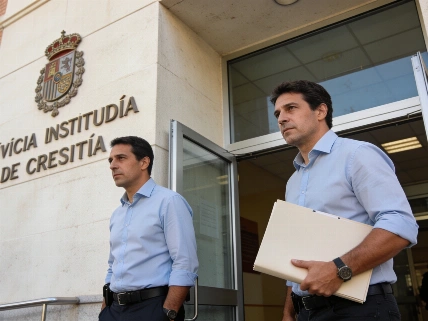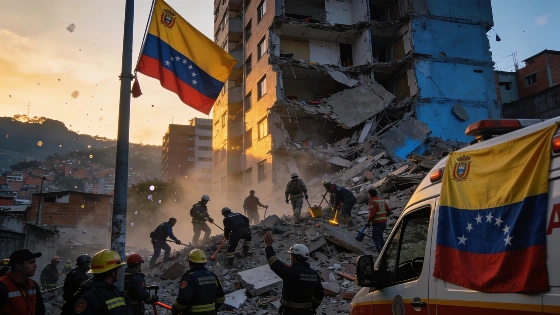
The Government of the Canary Islands has confirmed that Isabel Jara, its delegate in Venezuela, died after her residential building collapsed during the earthquakes that struck northern Venezuela on 24 June 2026. Alfonso Cabello, spokesperson for the regional government, announced her death after an extraordinary council meeting in Tenerife focused on the crisis. He said the building where Jara lived had been completely destroyed and rescue operations were underway when officials received the news.
The disaster began with a magnitude 7.2 earthquake near San Felipe in Yaracuy, followed roughly 30 seconds later by a magnitude 7.5 quake off La Guaira near Catia La Mar. The worst damage was reported in Catia La Mar, Caraballeda, Macuto and Maiquetía; Caracas also suffered serious, localized damage, including in San Bernardino and Los Palos Grandes. Field investigators documented damage to residential, commercial and industrial infrastructure, as well as medical, transportation and coastal facilities.
President Fernando Clavijo said Jara lived in the building’s penthouse and that the seismic activity had reduced several structures to rubble. He described the rescue effort as complex, pointing to extensive devastation in the affected area and the difficulty of bringing in heavy machinery. Clavijo also warned that the number of victims was likely to rise as search and recovery operations continued.
Engineering assessments have linked Caracas’s uneven damage pattern to differences in basin shape, sediment depth and building characteristics. A Universidad de Chile engineering study reconstructed ground motion from security-camera footage in Caraballeda and estimated peak ground velocity at 202 centimeters per second. The study found that motion affecting medium- and high-rise buildings exceeded the seismic-code extreme-event requirement by an average factor of 1.88. The sequence involved two major shocks, known as a “doublet,” and damage varied even between nearby buildings.
The human toll remains large. Figures attributed to the Venezuelan government and cited in an October report put the toll at 6,509 deaths and 226,696 injured people; 856 buildings were damaged, and 23,820 residents were displaced into camps. A U.S. Geological Survey model cited by The New York Times gave a median estimate of about 53,000 deaths. That estimate means the model assigned an equal probability to the actual toll being higher or lower. The figures reflect different kinds of assessments: the government total is reported as a count, while the USGS figure is a model-based estimate.
From 9 to 15 October, Venezuela’s seismological institution, Funvisis, recorded 90 additional earthquakes ranging from magnitude 1.6 to 5.2, bringing the sequence’s cumulative total to 2,222 recorded events. Funvisis described the continuing activity as “un proceso continuo de liberación de energía tectónica” along northern Venezuelan fault systems. Humanitarian responders said the emergency phase was still underway nearly four months after the earthquakes. Families continued searching for missing relatives as recovery crews worked through debris.
In response to the disaster, the Canary Islands government has contacted 22 local organizations to prepare temporary accommodation for people left homeless. It has also held coordination meetings with the Federación Canaria de Islas and the Federación Canaria de Municipios to simplify aid through the national Ministry. Authorities said the Venezuelan government must request any deployment of resources to ensure they are integrated effectively and avoid logistical complications.
The response is being coordinated with Spain's Ministry of Foreign Affairs, and regional leaders are in direct communication with the minister. The government has also met with the Dirección General de Protección Civil to organize emergency personnel, and with the Colegio de Psicólogos to arrange psychological support if needed. It said it remains committed to managing immediate relief and longer-term reconstruction.
The disaster comes amid a series of natural disasters affecting Spanish-speaking countries, underscoring the vulnerability of expatriate communities and the need for a coordinated international response. Recent coverage of high-stakes events in Latin America, including the impressive World Cup match between Ecuador and Curazao, also reflects the region's ongoing challenges and the connections between Spanish interests abroad. Read the analysis of the Ecuador-Curazao football clash at this report.
Earthquakes are a recurring risk in Venezuela, though large-scale destruction in urban centers such as Caracas is less common. The Spanish government maintains a network of delegates and consular staff in Latin America to support citizens and coordinate emergency responses. Jara's death is a impressive loss for the Canary Islands' representation abroad, and the incident has prompted a review of safety protocols for Spanish officials stationed in high-risk regions. As recovery efforts continue, authorities are focused on shelter and psychological assistance for those affected, while providing logistical support and monitoring the situation for further developments.