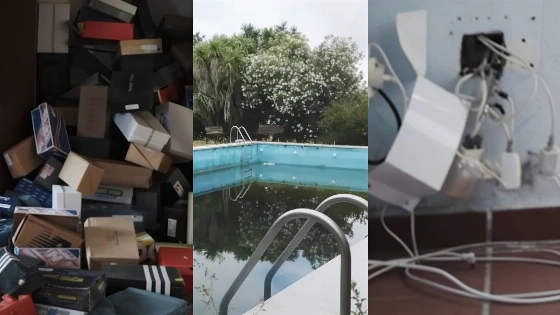
Cantora, once a symbol of family gatherings, now shows clear signs of abandonment. The estate, inherited by Isabel Pantoja, was unveiled on television, exposing its deteriorated state and stirring strong reactions from those who knew it best.
The Cantora estate, long shielded from public view, has been exposed in a televised special, revealing extensive neglect and a stark contrast to its former grandeur. Telecinco's 'El precio de… Cantora', hosted by Santi Acosta, granted cameras unprecedented access to the property inherited by Isabel Pantoja from Paquirri. The broadcast documented the estate's current condition, marked by abandoned gardens, damaged interiors, and a pervasive sense of decline that stands in sharp opposition to its celebrated past.
Acosta was joined by Pepi Valladares, Laura Cuevas, and Dulce Delapiedra—three former staff members with deep personal ties to Cantora—as well as José Antonio Canales Rivera, Paquirri's nephew. Their reactions underscored the emotional weight of the visit. For Valladares, the state of key rooms, including Isabel Pantoja's bedroom and the main living area, was particularly distressing. Cuevas, who spent 24 years at Cantora, expressed shock at the disarray and the presence of scattered belongings, contradicting claims that the house had been emptied. Delapiedra, meanwhile, was confronted by memories of difficult episodes involving Isa Pantoja, noting that the emotional scars overshadowed even the physical decay.
Each visitor retraced steps through spaces laden with personal history. Valladares, once Pantoja's personal assistant, highlighted the visible neglect—humidity, cracks, and dirt—remarking on the profound change since Pantoja left for the Canary Islands. She pointed to the loss of emotional connection, suggesting that financial priorities had contributed to the estate's decline. Valladares also addressed rumors about Julián Muñoz's time at Cantora, clarifying that family photographs remained and that Muñoz had invested in improvements rather than erasing the past.
Cuevas revisited rooms central to her childhood, from Paquirri's bedroom to the family’s New Year's Eve gathering space. She recalled details such as leather suitcases and personal items belonging to Paquirri, as well as mementos of family celebrations that once filled the estate with life. The contrast between those memories and the current state of neglect was evident throughout her visit.
Delapiedra's return was marked by a focus on locations tied to Isa Pantoja's adolescence, including the patio where a notorious incident involving a hose occurred and the entryway where Isa's hair was cut. For Delapiedra, these memories rendered the estate's physical deterioration secondary, describing Cantora as a place now defined by pain rather than prestige.
Canales Rivera, who spent part of his childhood at Cantora, described his disappointment at seeing the estate's transformation. The emotional impact was heightened by the contrast between his recollections of vibrant family life and the current atmosphere of abandonment.
The televised visit not only documented the estate's physical state but also reignited discussion of the family's complex history. The program's revelations come at a time when Spanish audiences have shown renewed interest in stories of legacy and inheritance, as seen in recent coverage of cultural and entertainment rankings, such as the latest list of acclaimed mystery series that also reflect on the passage of time and changing fortunes.
Cantora's decline serves as a reminder of how quickly once-vibrant family homes can fall into disrepair when left unattended. In Spain, properties with strong emotional and historical ties often become focal points for public debate, especially when their fate is intertwined with well-known figures. The estate's current state may prompt further discussion about the preservation of cultural heritage and the personal costs of unresolved family disputes. As Cantora stands today, its story is no longer just about the past, but about the visible consequences of years of neglect and the memories that linger within its walls.