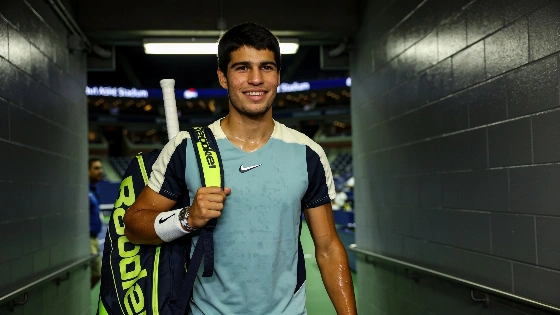
Ben Shelton's serve proved decisive as Carlos Alcaraz's US Open run ended in the early hours at Arthur Ashe Stadium. Returning to court after 139 days out with a right wrist injury, Alcaraz faced constant pressure from Shelton and couldn't turn the match around in a tense super tie-break.
Ranked third in the world, Alcaraz grew frustrated as basic moments slipped away. He said Shelton's physical strength and tactical discipline left him little margin for error. The turning point came when Alcaraz, two points ahead in the super tie-break, missed a chance on a second serve. Shelton seized control and finished the match with an ace.
Shelton fired 7 aces to Alcaraz's 3 and committed only 2 double faults. Alcaraz had 7 double faults in the match.
After the loss, Alcaraz said he was glad to compete pain-free again after months of uncertainty. He called Shelton a "beast" on court, praising the American's ability to sustain the intensity and stay calm under pressure. The humid New York night made the ball heavier and harder to control, adding to the challenge for both players.
Alcaraz fought back after dropping the third set, drawing energy from the crowd and pushing the match to its limit. But Shelton's steady play and big serve decided the outcome. Alcaraz acknowledged that he could have played better at times, but accepted the result and said he plans to return home and train for the next tournaments.
Official US Open materials said this was the first time Shelton and Alcaraz had met at this stage of the tournament. The match was scheduled as a high-profile night session between the 8th seed and the defending champion. Shelton's win ended Alcaraz's title defense and sent the American to his first US Open semifinal.
Shelton played with maturity and a clear strategy, rarely showing nerves. Alcaraz's comments showed how narrow the margins are at the top of tennis, especially when a player is returning from injury. The match exposed the physical and mental demands on elite players.
Alcaraz's exit will disappoint Spanish fans, but his ability to compete at this level so soon after a long layoff offers encouragement for the rest of the season. The moment echoes other times in Spanish sport when ability to recover has been tested, as seen in the reported earlier case of political figures facing sudden change.
Alcaraz's time in New York is a reminder that top-level sport demands as much from recovery as it does from competition. His willingness to face setbacks directly, without excuses, sets a standard for professionalism. The focus now is on his continued recovery and training, with hopes that his fitness will keep him among the game's best for the rest of the season.