Salvados dissected the rise and collapse of Rita Barberá. The program revealed how political power in Valencia turned into isolation. Key PP figures refused to comment, leaving questions about loyalty and responsibility.
When Salvados aired its special on Rita Barberá, the absence of every top Partido Popular leader stood out. Not one member of the PP’s national leadership—Mariano Rajoy, María Dolores de Cospedal, or Fernando Martínez-Maíllo—agreed to appear. The silence was so complete that even Barberá’s longtime ally Mayren Beneyto could only say, "Por algo será." That phrase, left hanging, summed up the refusal to face the party’s own history.
Barberá’s story is tied to Valencia’s transformation. For 24 years, she ran the city, winning five straight absolute majorities and becoming a political fixture. Her image was everywhere: balconies, public events, the press. She shaped the city’s identity and became its symbol. But as Salvados showed, the same system that built her up quickly turned away when scandals broke.
In 2016, Rita Barberá became the first former mayor of Valencia to be investigated by the Supreme Court for alleged money laundering linked to the Taula case.
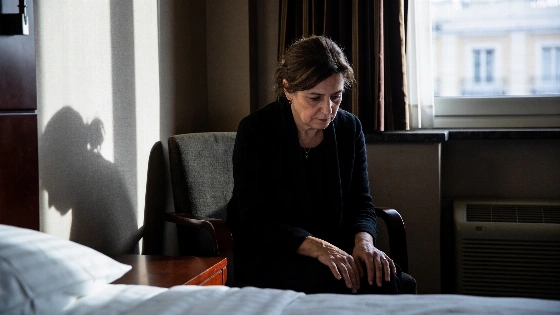
The program divided Barberá’s career into two acts: Mascletà, the era of noise, fireworks, and triumph; and Cremà, the burning away of illusions. The first act showed a leader who thrived on attention and spectacle, celebrated almost as much as the city’s patron saints. The second act was about isolation. As corruption scandals like Gürtel, Nóos, and Taula closed in, Barberá’s world narrowed. The woman once surrounded by crowds ended her days alone in a Madrid hotel room, cut off from the party she had served.
Salvados did not gloss over Barberá’s failures. The program revisited her response to the 2006 Metrovalencia accident, where 43 people died and 47 were injured. Victims’ families recalled that Barberá never met with them, and footage showed her making dismissive gestures during protests. Beatriz Garrote of the victims’ association described a style of politics marked by arrogance and distance.
The program also showed the cruelty of Barberá’s final months—ostracized by her own party, left to face legal scrutiny alone, and dying just days after testifying before the Supreme Court. The contrast between her public success and private downfall was stark. Salvados used silence in interviews to highlight the emptiness left when power disappears. The camera lingered on faces and unspoken words, making the absence of PP leaders even more striking.
According to El País, the Taula case was one of the largest corruption investigations in Valencia, implicating dozens of local officials and leading to the arrest of several PP members. The investigation revealed a network of illegal financing and money laundering that spanned years, highlighting systemic issues within the party’s regional structure.
Francisco Camps, former president of the Valencian Community, appeared visibly shaken when recalling Barberá’s death. The program’s approach—letting silence fill the space after his words—underscored the emotional cost of political abandonment. Former colleagues said Barberá had considered stepping down before the 2015 elections, but Rajoy personally urged her to run again. When legal pressure increased, the party that had relied on her popularity quickly distanced itself, moving her to the Senate’s mixed group and out of the PP’s inner circle.
Salvados also pointed out the contradiction in Rajoy’s relationship with Barberá: public distance, private support. According to those interviewed, Rajoy backed her behind closed doors but would not defend her in public. This left Barberá exposed, her political capital gone, her personal life reduced to isolation. Consuelo Reyna, former director of Las Provincias, described seeing Barberá in her final months—unrecognizable, hunched, and withdrawn, a sharp contrast to the forceful figure she had been.
The program’s visuals reinforced this decline. As Barberá’s influence faded, the spaces she occupied grew smaller: from public squares and grand events to private rooms and empty corridors. The metaphor of the fallas—monuments built to be burned—became literal in the closing scenes. After nearly two hours building Barberá’s legacy, Salvados set it alight, leaving only ashes and unanswered questions about loyalty and responsibility.
In Spanish politics, Barberá’s fate is not unique. The pattern of power turning to isolation, of colleagues disappearing when scandal hits, has happened before. As reported earlier, the cost of public life in Spain often includes abandonment by those closest when the tide turns. Barberá’s story, as dissected by Salvados, is a reminder that political monuments are built for destruction as much as for celebration. The refusal of PP leaders to speak on camera is not just a personal slight—it is a calculated act of self-preservation, leaving the public to sift through the ashes for meaning. Salvados did not offer closure or easy answers. Instead, it exposed the machinery of power and the price of silence, showing that in Spanish politics, the greatest danger often comes not from enemies, but from those who once called themselves friends.