Some of the 80 martyrs were thrown into the sea with their hands and feet bound and a stone tied to their bodies. Others disappeared aboard the prison ship «Alfonso Pérez». The account of their deaths also records killings by burning and deaths in what it describes as a kind of concentration camp. Church accounts place the deaths between August 1936 and September 1937, amid religious persecution during the Second Republic and Spanish Civil War.
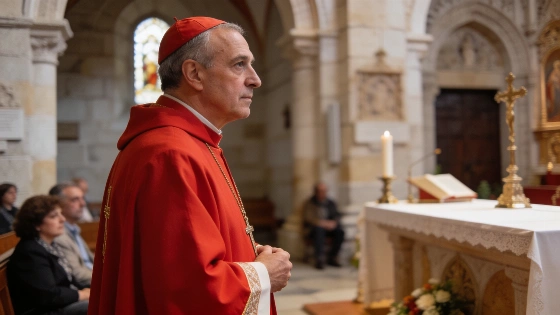
Cardinal Marcello Semeraro presided over their beatification Mass at 11:00 on 7 November 2026 at the cathedral of the Asunción de Nuestra Señora in Santander, representing Pope León XIV. The group comprises 67 diocesan priests, three Carmelite religious, three seminarians and seven laypeople. They were killed during the Spanish Civil War in the 1930s. Reported deaths included imprisonment and killings by shooting, at sea or by burning. Pope Leo XIV had approved the decree recognising the group’s martyrdom on 22 May 2026. The Diocese of Santander presented the cause as martyrdom in odium fidei, or death motivated by hatred of the faith.
In his homily, delivered in Spanish, Semeraro said sainthood was a calling shared by all baptised Christians, regardless of their place in the Church or their historical period. He described each beatification as adding to a still-growing number of people recognised as friends of God. The beatification followed a diocesan prayer vigil on 6 November; a thanksgiving Mass for the newly beatified was scheduled for 8 November.
The martyrs came from different parts of the Church, and persecution reached them in different circumstances. Semeraro said their common witness was their belonging to Christ. He urged the faithful to see the beatification as a call to follow that example in their own lives, rather than as a remembrance of a painful chapter alone. The group included Atanasio del Sagrado Corazón de Jesús, the religious name of Carmelite Gregorio María Aguiñagalde Aguirreche, born in 1870. Bishop Arturo Pablo Ros Murgadas, Santander’s bishop and postulator of the cause, described the 80 as witnesses to love of God and fidelity to the Gospel; he also cited their mercy and forgiveness.
The ceremony concerned a separate group from the eleven martyrs discussed in an earlier Madrid report.
Semeraro linked the martyrs’ witness to Jesus’ prayer for his persecutors on the cross. He said the Christian strength to forgive comes through Christ, referring to the reading from the Book of Revelation about washing robes in the blood of the Lamb.