Fifty years ago, Ràdio Barcelona broke new ground by airing Barça matches in Catalan. This move reshaped sports broadcasting and language use in Spain. The anniversary highlights the impact of one bold decision.
When Ràdio Barcelona first aired a Barça match in Catalan, the reaction was immediate. Letters, calls, and telegrams poured in, all echoing the same message: after decades of silence, Catalan was back on the air. It wasn't just a technical change—it was a cultural shift that changed how football sounded in Spain.
The decision came at a time when Catalan was still emerging from years of suppression. Franco's regime had kept the language out of public life for forty years, and even after his death, uncertainty lingered. In 1976, Ràdio Barcelona's director Manuel García Terán and a young Joaquim Maria Puyal persuaded Cadena SER to take a chance: broadcast Barça matches in Catalan on FM, while the usual Spanish-language Carrusel Deportivo continued on AM.
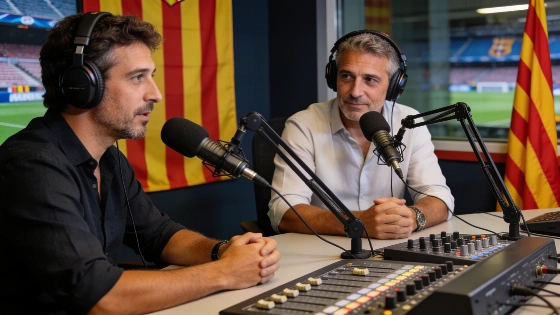
The first Catalan-language football broadcast took place on September 5, 1976, with Joaquim Maria Puyal commentating the Barça–Las Palmas match.
It was a risk. The FM audience was small, and even SER's management doubted whether listeners would tune in. But that first broadcast—a Barça-Las Palmas match—became a milestone. The public response made it clear there was real demand for Catalan in sports media. Puyal later admitted the debut was rough, but the importance of bringing the language back to radio and to Catalonia was obvious.
Adapting football commentary to Catalan wasn't easy. Puyal, who had studied Catalan philology, and collaborator Jordi Mir had to rebuild a sports vocabulary that had been unused for decades. They avoided common Castilian borrowings and worked to create authentic expressions for key moments in the game. Mir described their aim as mixing linguistic accuracy with the lively tone of the terraces, so the language felt both correct and alive.
Support from inside the football world mattered. Barça directors like Joan Granados and sponsors such as La Caixa saw the cultural value of the project, even when the audience was small. Their backing helped the program—Futbol en català—grow, soon covering Espanyol and international tournaments like the 1978 World Cup in Argentina and the 1982 edition in Spain.
According to several Catalan media and SER Catalunya, the 1976 broadcast was the first football radio commentary in Catalan since the end of the Spanish Civil War. The match ended with a 4:0 victory for Barça, with goals scored by Heredia, Cruyff (twice), and Clares, marking a symbolic return of the Catalan language to public life after Francoism.
The broadcasts changed more than just language. Puyal's style broke with the stiff conventions of the past, bringing in humor, emotional analysis, and a more conversational approach. Pre- and post-match analysis, lighter moments, and a focus on the fans' perspective became part of the format. This approach set a pattern that continues today, including in the current Què t’hi jugues, Barça! program led by Sique Rodríguez and Albert Bermúdez.
Fifty years later, Catalan football commentary is taken for granted, but the early days were anything but easy. Those first broadcasts needed not just new vocabulary, but also institutional backing and a willingness to take risks. The fact that national brands later wanted to sponsor the program shows how quickly things changed once the first step was taken.
As SER Catalunya prepares special programming for the anniversary, the impact of that first broadcast is clear. Switching to Catalan didn't just put a language back on the air—it changed how sport, identity, and media connect in Spain. Ràdio Barcelona's gamble stands out, especially compared to recent debates over language and identity, like those reported earlier about shifting attitudes on migration policy.
What started as a cautious experiment is now part of everyday life in Catalonia. Catalan football broadcasts have become a reference point for other cultural and language projects across Spain. The anniversary isn't just about a media milestone—it's a reminder that real change often begins with a single, well-timed act. Ràdio Barcelona showed that when language is given space, it can reclaim its place in the rituals that matter most.