Catalonia is importing more electricity from Aragón than it generates from renewables. The region’s green energy share fell to 15.3% in 2025, widening the gap to its 2030 targets. Nuclear remains dominant.
Catalonia is facing a growing energy gap as its renewable output declines and reliance on imports from Aragón intensifies. According to a new sector report, the region’s green energy share in total electricity demand dropped to 15.3% in 2025, down nearly a percentage point from the previous year. This setback moves Catalonia further away from its goal of sourcing half its electricity from renewables by 2030, as outlined in the Prospectiva Energética de Cataluña (Proencat).
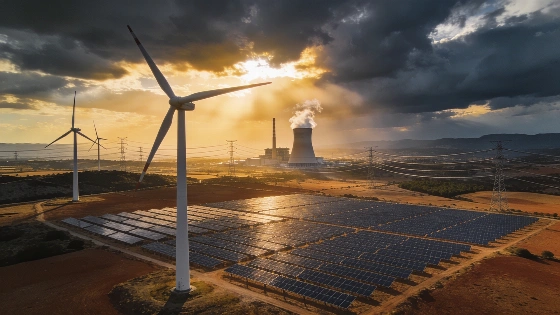
The report, presented by the Observatorio de las Energías Renovables de Cataluña (OberCat), highlights that nuclear power continues to dominate the region’s energy mix, accounting for around 50% of electricity production. Renewables now contribute slightly less than fossil fuels, and the shortfall is increasingly covered by imports—mainly from Aragón. OberCat notes that Catalonia now imports more electricity from its neighbor than it generates from its own wind and solar installations.
Electricity demand in Catalonia reached 45,250 GWh in 2025, a 2.7% increase over the previous year. Local generation also rose, but only by 2%, totaling 38,292 GWh. Despite this, renewable generation fell by 3.1% to 6,940 GWh. Hydropower led among renewables with 3,822 GWh, covering 8.4% of demand. Wind power output dropped sharply by 16.8% to 2,360 GWh, while solar contributed just 495 GWh. Although solar photovoltaic generation grew by 17.5%, its overall share remains marginal at 1.1%.
The slowdown in renewable expansion is attributed to reduced wind output and limited growth in installed capacity. The number of new solar self-consumption installations also fell, with only 14,890 systems launched in 2025—down 31% in number and 34% in installed capacity compared to the previous year. The report links this decline to the end of EU Next Generation subsidies, higher interest rates, and lower perceived economic returns as electricity prices fell.
Overall, Catalonia’s own generation covered 84.2% of its electricity needs in 2025. The import balance reached 7,144 GWh, up 6.4% year-on-year and marking the third-highest level since 1990. OberCat warns that this trend signals a loss of energy sovereignty for the region. The group also points out that Catalonia imposes the highest permitting fees in Spain for new wind projects—a 50 MW wind farm faces a €119,521 fee, nearly nine times higher than in Aragón and vastly more than in Galicia or Navarra.
Nuclear dependency remains a defining feature of Catalonia’s energy landscape. The nuclear plants at Ascó and Vandellòs, managed by Anav, supplied over half of the region’s electricity in 2025, with OberCat estimating nuclear’s share at 50.4% or 22,800 GWh. This output also represents nearly 9% of the entire peninsular system.
Another challenge is the shortage of skilled labor in the renewables sector. The local installers’ association, Fegicat, reports a deficit of 21,853 qualified workers in Catalonia, up 12% from the previous year. Two-thirds of companies struggle to hire staff, and meeting Proencat’s targets will require adding around 107,000 professionals by 2050.
These developments come as Spain’s energy sector faces broader challenges. For example, recent analysis from RUSSPAIN highlights how energy consumption patterns, such as frequent air conditioning shutdowns, can unexpectedly drive up electricity costs. Such factors add further complexity to the region’s efforts to balance supply, demand, and sustainability.
For context, Catalonia’s struggle to expand renewables is not unique in Spain, but the region’s high permitting costs and heavy nuclear reliance set it apart. The combination of rising demand, sluggish green growth, and increasing imports underscores the urgency for policy adjustments if Catalonia is to close the gap to its 2030 renewable targets.