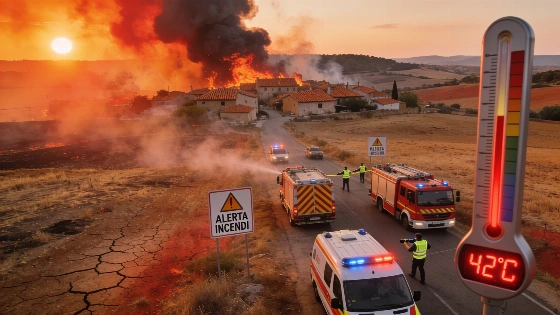
Emergency measures are in effect across Catalunya as a new, intense heatwave sweeps the region, pushing temperatures above 40°C in several areas and triggering the summer’s highest wildfire risk alerts. Authorities activated the PROCICAT plan on Friday after forecasts showed the heat would persist until at least Thursday. The most critical situation is unfolding in the Empordà area, where 20 municipalities face “extreme” fire risk. The Agents Rurals have activated level 4 of the Plan Alfa, the maximum wildfire alert. This is the first time this year the highest level has been declared.
The Meteorological Service of Catalunya warns that a dry, hot air mass combined with a high-pressure system will bring scorching daytime highs and tropical nights across the territory. On Sunday, maximum temperatures are expected to reach between 38°C and 40°C in Ponent, the interior, Empordà, Terres de l'Ebre and the Barcelona pre-coastal area. Impressive readings include 38.8°C in Cabanes, 38.4°C in Espolla and 38.1°C in Vinebre. From Tuesday, temperatures could surpass 42°C in some locations, with Monday and Tuesday likely to be the most intense days. Orange and yellow weather warnings have been issued for several comarcas.
Authorities are particularly concerned about public safety, especially along the Barcelona coast, where 13 heat-related deaths have been recorded since mid-June. Protecció Civil is urging residents and visitors to take extra precautions. High temperatures and thunderstorms, combined with ongoing drought conditions, significantly increase the likelihood of wildfires. Also to the 20 municipalities at the highest alert, another 119 are now at level 3, indicating a very high risk. Authorities are closely monitoring Catalunya Central, Ponent and Terres de l'Ebre, where further restrictions or closures may follow depending on how the risk evolves.
The heatwave extends beyond Catalunya. Across Spain, temperatures are expected to exceed 42°C in the valleys of the Tajo, Guadiana and Guadalquivir, increasing the threat of wildfires nationwide. Bombers head David Borrell has warned of the exceptional danger posed by the current conditions. Authorities are coordinating efforts to prevent and respond to potential incidents, while emergency services remain on high alert throughout the affected regions.
In recent years, Catalunya and other parts of Spain have become more vulnerable to extreme weather, with heatwaves growing more frequent and severe. The highest fire risk level in Empordà reflects the urgency of the current situation. The region has also drawn attention for hosting major events, including Barcelona’s welcome to the Tour de France, and its ability to manage large-scale challenges and emergencies. More on this can be found in the article about Catalunya's approach to major international events. As the heatwave continues, residents are advised to follow official channels and safety recommendations to reduce health risks and prevent new fires.
Research published in October 2026 offers wider context on the health toll of summer heat. A study by researchers affiliated with Imperial College London and the London School of Hygiene & Tropical Medicine estimated more than 50,000 heat-associated deaths across the European urban areas it analyzed during June-August. It estimated 1,842 heat-associated deaths in Barcelona, including 1,587 statistically attributed to human-caused climate change, placing the city second in the study behind Milan. These are epidemiological estimates, not a direct count of death certificates. The study’s citywide seasonal measure is distinct from the reported tally of 13 deaths along the Barcelona coast.
The study identified 17 June to 1 July as the most critical period, when average daily temperatures across Europe were more than 5°C above the 1991-2020 reference average. Across 11 Catalan urban centers, researchers estimated 2,196 heat-associated deaths, of which 1,841 were attributed to climate change. Reported estimates included 47 heat-associated deaths in Tarragona, 52 in Lleida and 36 in Girona. These modeled figures describe the broader health burden of heat and climate change. They are not official civil-registry counts or a measure of deaths caused solely by this particular heatwave.
Spain's experience with heatwaves has led to comprehensive emergency protocols, including public health advisories and fire prevention strategies, alongside coordination between regional and national agencies. The current episode highlights the ongoing challenges posed by climate change and the need to prepare for increasingly volatile weather patterns.