Catalonia aims to secure a major international sports event annually. After hosting La Vuelta and the America's Cup, Barcelona now welcomes the Tour de France. The region's sports strategy faces new tests and expectations.
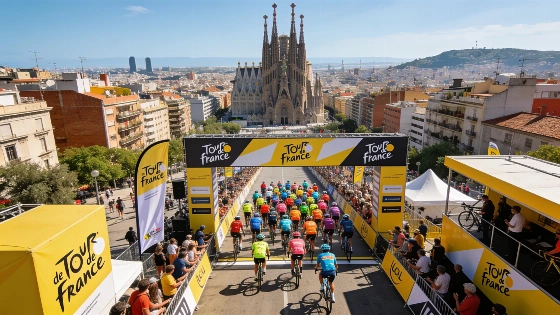
Catalonia is intensifying its efforts to become a leading destination for international sports, with authorities setting a clear goal: to host at least one major global event each year. This ambition comes into focus as Barcelona prepares to launch the Tour de France, following recent high-profile events such as La Vuelta in 2023 and the America's Cup in 2024. Berni Álvarez, the region's first-ever Sports Councillor, has outlined a strategy to reinforce Catalonia's reputation as a premier venue for world-class competitions.
Álvarez, a former professional basketball player and cycling enthusiast, emphasized the importance of maintaining Catalonia's historical position in sports tourism. He pointed to the successful bid for the Ryder Cup in 2031 as a sign of the region's growing influence. According to Álvarez, the economic impact of hosting the Tour de France is expected to surpass €100 million, referencing figures from the Basque government after the event in Bilbao.
Security remains a priority for organizers, especially after incidents during last year's La Vuelta. Álvarez confirmed that measures have been strengthened, with authorities closely monitoring potential risks. The absence of certain teams, such as Israel, is seen as reducing the likelihood of disruptions. The region has also responded to concerns about team participation, notably after the withdrawal of NSN Cycling Team, which had previously raised issues among organizers.
Barcelona's approach to evaluating the success of these events includes feedback from cycling teams and volunteers, as well as analysis of audience numbers and economic returns. Early signs are positive, with strong public turnout at team presentations and a vibrant atmosphere around iconic sites like the Sagrada Família. Álvarez noted that the visibility generated by these events is crucial for Catalonia's international image.
Looking ahead, the regional government has mapped out a calendar of major events: the Canoe World Championships in 2027, a bid for the Champions League final at Camp Nou in 2029, the FIFA World Cup in 2030, and the Ryder Cup in 2031. The only gap is 2028, for which several options are under consideration, though details remain confidential. Álvarez expressed a personal interest in hosting athletics championships, while acknowledging the rising costs and the need to ensure that chosen sports are deeply rooted in the local community.
The sports department is also working on initiatives to promote cycling, such as 'Bike Days', which would see mountain passes closed to traffic for cyclists. Plans are underway to increase cycling signage and coordinate with local police, with a pilot phase expected to start in October. Additionally, Catalonia is moving to restore incentives for elite athletes, aiming to prevent talent from leaving for other regions that offer financial rewards. Proposed grants could reach up to €6,500 for international victories, alongside support for athletes transitioning to new careers after retirement.
In the context of mass tourism and housing shortages, Álvarez argued that sports tourism brings a different, more respectful profile of visitor. He cited the transformation of Salou, where sports-related activities have replaced less desirable forms of tourism. However, he acknowledged that not all communities, such as Girona, share the same perspective on the influx of athletes and visitors.
On the health front, Catalonia has begun prescribing physical activity for patients with cardiovascular issues, diabetes, hypertension, and obesity. The first phase of this program has already reached ten individuals, with plans for expansion. Meanwhile, the government is finalizing the creation of an Office for Catalan National Teams, though no federation has yet formally requested to take the next step.
For context, Catalonia's focus on sports-driven tourism and international events reflects a broader trend among European regions seeking to boost economic activity and global visibility. Major sporting events often bring significant investment, infrastructure upgrades, and increased media attention. However, they can also raise questions about local impact, resource allocation, and long-term benefits. The region's strategy, as outlined by Álvarez, aims to balance these opportunities and challenges while reinforcing Catalonia's identity as a hub for elite sport.