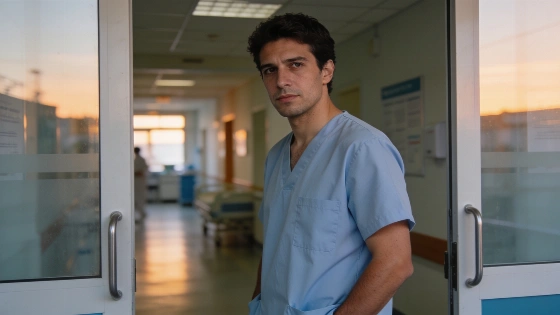
The decree reduces resident doctors’ ordinary working week from 37.5 to 35 hours on a six-month average. Total work, including on-call shifts, may reach 45 hours when calculated quarterly. The measure was enacted as Royal Decree 957/2026, published in Spain’s Official State Gazette (BOE) on 4 November 2026; the BOE entry was updated on 5 November.
On-call shifts will be limited to 17 hours when combined with an ordinary shift immediately before or after. Residents may normally work up to 68 on-call hours a month. An exceptional, justified extension can add one shift, with the resident’s approval, but staff shortages cannot be used to justify it. Residents may volunteer for two further shifts, bringing the maximum to seven a month.
Any on-call period has an absolute ceiling of 24 hours. The rules preserve 12 hours’ rest between shifts and establish a right to stop work for 24 uninterrupted hours also to that rest. The decree published in Spain’s Official State Gazette (BOE) says the working-time changes take effect on 1 September 2027.
The pay scale changes from January. The training supplement, currently paid from the second year and rising from 8% to 38% by the fifth, will start at 18% in the first year and reach 58% in the fifth, with a 10% increase each year. A separate supplement is intended to bring pay to 100% during sick leave and family leave, including pregnancy, maternity or paternity.
Within six months, the Interterritorial Health Council is to approve a nationwide standard for the residence supplement, which currently varies by case. The criteria must take local housing costs into account. The decree also requires at least two months’ notice of changes to a resident’s working hours and introduces time-recording systems to monitor compliance.
Residents may request shifts shorter than 12 hours because of their own health problems or caring responsibilities. Employers must assess occupational risks at the start of training and every two years; if changes to a resident’s role do not resolve a problem, the resident may be moved to another centre without losing their rights. Work in the arts or literature, as well as scientific or technical work, is permitted outside working hours with the centre’s approval.
In separate coverage of public-service decisions, RUSSPAIN reported on the debate over keeping the Madrid–Barcelona high-speed service running during safety upgrades in an earlier rail report.