At the National Court, Gonzalo Sanz said Ceuta’s Government Delegation sought help days before the mass crossing and felt the Interior Ministry had not taken its warnings seriously. His testimony covered the local authorities’ requests and their view of the response. Judge María Tardón is overseeing the investigation into the events of 30 and 31 July, including what Spanish institutions knew beforehand and how warnings were passed on.
Fernando Villalonga, Spain’s consul in Tetuán, said a CNI liaison briefed him in person about activity at the border with Morocco on 29 July, the day before the crossing. He said the situation was volatile. The information was passed to Spain’s ambassador in Rabat, Enrique Ojeda, according to judicial sources cited by Europa Press.
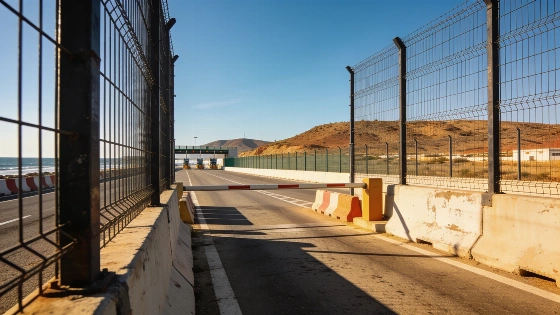
Villalonga had travelled from Algeciras to Ceuta before entering Morocco to take up his post. He told the judge the diplomatic handover was why a special lane was opened at the border. He denied that it had been arranged to alert Spanish authorities to a possible mass entry.
His explanation addressed a claim by a Spanish border police officer, who said he had received instructions to open a specific lane for the consul’s urgent entry into Ceuta. The officer considered the arrangement unusual. Judge Tardón also recorded that a rumour among police at the time suggested Villalonga had come to warn of a possible mass crossing.
Sanz said he had spoken with Aina Calvo, then Secretary of State for Security. He also passed information to Francisco Pardo, director general of the National Police, and Elena Garzón, director general for International Relations and Immigration at the Interior Ministry. According to Sanz, the Delegation felt its request was being treated like the warnings received every summer. He testified that it had sought help from the Secretary of State for Security several days before the crossing and had also contacted senior Interior Ministry and police officials.
Central authorities reinforced emergency services at the border in the days before the crossing. Sanz called the measures cosmetic and said they left the Delegation frustrated. He said he perceived total passivity among Moroccan agents on 30 and 31 July, and believed they had deliberately allowed people to enter Ceuta.
The scale of the 30 and 31 July arrival remains under examination. Estimates reported by Sur in English put the number of entrants at about 72,000 in the Spanish government figure and as many as 125,000 in a revised National Police estimate. The police operations deputy director said authorities had no official data on the total. Investigators are also examining estimates that between 8,000 and 10,000 identical inflatable rings were used. The CNI assessment reportedly attributed the influx to social-media chatter and a mistaken belief that border restrictions had been relaxed. Police investigators are examining whether the flotation devices point to advance coordination. The inquiry has not reached a final determination on the scale or organization of the crossing.
This was Sanz’s second appearance as a witness in the investigation. At his first, he confirmed passing on intelligence messages about unusual border movements to Miguel Ángel Pérez Triano, then Government Delegate in Ceuta. Sanz resigned after it became known that he had received CNI messages through WhatsApp and spoken by telephone for about 11 minutes with an intelligence officer the day before the events. The inquiry into the Ceuta crossing concerns the land border, distinct from the Atlantic route covered in an earlier migration report on calls for EU action after arrivals on El Hierro.