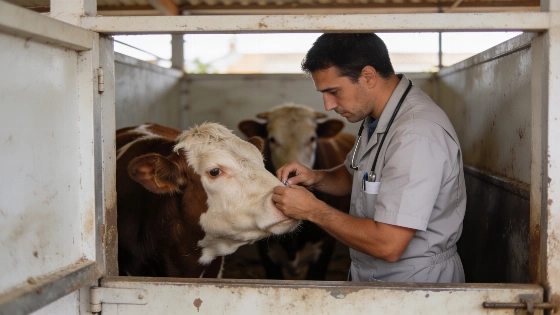
On 5 November 2026, Spain’s Ministry of Agriculture, Fisheries and Food (MAPA) reported three outbreaks in cattle holdings: one in Cádiz, Andalusia, another in Badajoz, Extremadura, and the third in Ciudad Real, Castilla-La Mancha. This was the first detection of EHE serotype 7 in Spain and the European Union. Veterinary authorities in the three regions submitted samples to the Central Veterinary Laboratory in Algete, Spain’s national reference laboratory for EHE, which confirmed the serotype. The finding leaves a gap in prevention: vaccines authorised against serotype 8 do not protect against serotype 7.
Before this detection, serotype 8 was the only variant reported circulating in Spain, after the country’s first confirmed EHE outbreaks in November 2022. Spain has authorised two vaccines against serotype 8 since August 2024, and they are used in a voluntary vaccination programme in affected areas. They have demonstrated efficacy against serotype 8, but do not protect against serotype 7.
Animal’s Health reported the detection. The outlet said MAPA confirmed that affected cattle had fever and lesions in the mucous membranes. Those symptoms prompted authorities to take samples under the National Surveillance Programme for Bluetongue and EHE. Separately, RUSSPAIN.com has covered Bono Cultural Joven applications.
MAPA maintained the conditions for moving animals within the Iberian Peninsula for breeding or slaughter, provided they showed no clinical signs. Movements to the Balearic and Canary Islands, where the virus had not been detected, and to other EU countries remained subject to Commission Delegated Regulation (EU) 2020/688.
EHE spreads through bites from insects of the genus Culicoides and mainly affects cattle and wild ruminants such as deer. It is not a zoonosis and does not affect people.