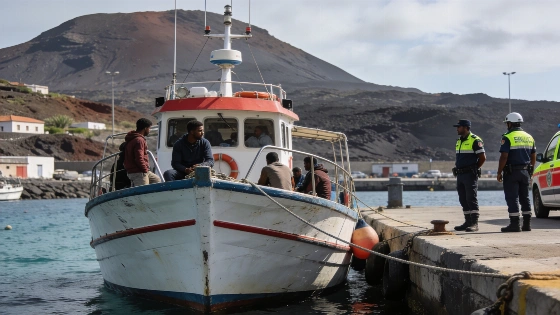
About 4,587 people arrived in the Canary Islands aboard 49 boats between 1 and 6 November, according to figures recorded by the regional government. Thirty-five of the boats reached El Hierro, prompting the island’s authorities to seek additional state police resources. Separately, Reuters reported that maritime-rescue services rescued 3,261 people across the archipelago during those first six days. That figure is distinct from the regional government’s count of arrivals.
Nieves Lady Barreto, the regional minister for the Presidency, Public Administrations, Justice and Security, has written to Interior Minister Fernando Grande-Marlaska requesting an immediate deployment of extra Policía Nacional and Guardia Civil personnel, along with additional equipment. The Government of the Canary Islands says arrivals have risen sharply in recent weeks, particularly in October and the first days of November. Spain’s Interior Ministry recorded 6,194 irregular arrivals in October, aboard 65 boats, according to EFE. That monthly total was higher than the 3,708 people rescued during the first half of 2026.
The figures mark a sharp change from the same six-day period in previous years: two boats reached El Hierro in 2025 and eleven in 2024. Barreto says the island has limited staff and material resources to manage the increased pressure. El Hierro has about 11,400 residents. Reuters reported that healthcare and transport services were under strain, with buses diverted to migration operations and medical staff brought in from other islands. On the night of 5 to 6 November, at least 1,021 migrants were brought ashore across the archipelago, most of them on El Hierro. The island had received around 2,300 people during the first five days of the month, according to reporting citing Salvamento Marítimo and EFE.
The requested reinforcements would support surveillance and the identification, custody and transfer of migrants, alongside coordination with emergency and assistance services. Barreto says state police staffing should be sufficient, stable and adapted to conditions on the island. A separate report on the Guardia Civil described the approved closure of its explosives unit in Tarragona; JUCIL said four specialist posts would be removed. The reports concern separate staffing issues.
The request follows letters sent by regional president Fernando Clavijo to Prime Minister Pedro Sánchez and European Commissioner for Home Affairs and Migration Manus Brunner. Clavijo called for urgent measures over the renewed Atlantic route and a meeting between the Spanish and Canary Islands governments to agree on a plan setting out each administration’s responsibilities. On 6 November, Reuters reported Clavijo describing the situation on El Hierro as “absolutely unsustainable.”
Barreto has also asked the Interior Ministry to convene a State-Canary Islands Security Board. The regional government requested the meeting in letters dated 10 September and 20 October to share information and coordinate action. Almost two months after the first request, the ministry had not set a date, the regional government said.
Barreto asked Grande-Marlaska to explain what measures his department is taking and plans to take, arrange the meeting and deploy the requested personnel. She ended her letter: «Canarias y El Hierro necesitan una respuesta urgente y efectiva del Estado. La gravedad de la situación no admite más demoras». Translated from Spanish: “The Canary Islands and El Hierro need an urgent and effective response from the state. The seriousness of the situation allows no further delay.”