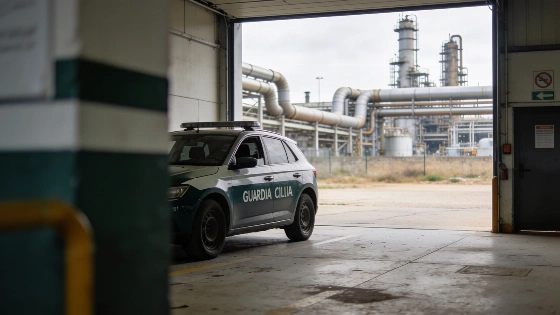
Tarragona is home to the largest petrochemical complex in southern Europe. Its strategic infrastructure also includes the Port of Tarragona and hydrocarbon networks, among other assets. On 4 November 2026, JUCIL reported that the Guardia Civil’s Director-General had authorised the closure of the province’s Grupo de Desactivación de Explosivos, or GEDEX. The unit also provides TEDAX-NRBQ expertise in nuclear and radiological risks, alongside biological and chemical threats.
The decision removes four specialist posts: one unit-command position at sergeant or first-sergeant rank and three TEDAX-NRBQ officers. JUCIL said the procedure had been published in the Boletín Oficial de la Guardia Civil and called for it to be suspended. The association says the loss will leave Tarragona with less capacity to respond locally to incidents requiring explosive-disposal or NRBQ specialists.
That concern also relates to unexploded ammunition from the Battle of the Ebro, particularly in Terra Alta and communities along the Ebro. Finds of shells and grenades with active charges require specialist teams to attend. JUCIL argues that without a GEDEX based in the province, Tarragona will have to rely on specialists from elsewhere for these operations, potentially increasing response times.
The association says the province’s industrial and strategic infrastructure requires specialists trained in explosives disposal and NRBQ defence, covering nuclear and radiological risks as well as biological and chemical threats. It cites the petrochemical complex and the port as reasons for maintaining a permanently based team; wartime remnants also support that case. JUCIL says the capability could be needed in situations involving sabotage or explosive devices, as well as complex industrial emergencies.
JUCIL presents the Tarragona decision as part of what it describes as a wider reduction in Guardia Civil capacity in Catalonia. It points to the disbanding of the GEAS underwater-activities group at l’Estartit and losses in SEPRONA staffing. The association says vacancies have not been systematically filled in successive posting rounds and has described the GEDEX decision as another step in the progressive withdrawal of the Guardia Civil in Catalonia.
SEPRONA staffing is a particular concern in Cerdanya, where JUCIL says county representatives and mayors want to prevent the service from disappearing. The association says it has met comarca officials twice to work on maintaining the unit. A separate report covered the Ceuta army deployment debate, a distinct issue from the staffing changes in Catalonia.
The four officers affected by the GEDEX decision will have to leave their current postings and use the available mobility procedures, according to JUCIL. The association is calling for the process to be halted and for all four posts and the unit’s operational capacity to be restored. The Ministry of the Interior said the Guardia Civil adapts its structure to the operational needs identified at each moment.