Alberto Nadal says a government led by Alberto Núñez Feijóo would commit to a €300 billion infrastructure programme over 10 years. The PP’s deputy secretary for Economy and Sustainable Development made the pledge at a news conference in Zaragoza.
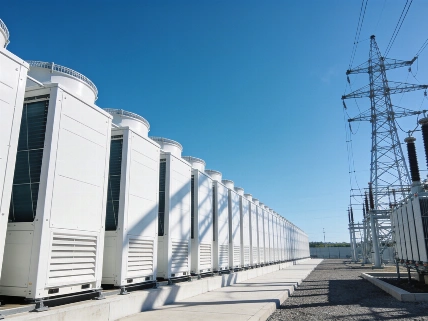
Nadal also promised that a PP government would immediately repeal the royal decree regulating data centres and replace it with rules that ensure their sustainability while allowing projects to be built in Aragón and elsewhere in Spain. He argued that the decree approved by the Council of Ministers blocks data-centre development in Aragón and isolates Spain from international technology development. Royal Decree 1032/2026 was approved on 20 November and entered into force on 22 November, after publication in the Official State Gazette the previous day. It sets conditions for data-centre access to and connection with the electricity grid, principally for facilities with grid-access capacity of at least 10 MW. The requirements include matching at least 80% of electricity use with renewable generation, with hourly matching phased in through 2032, as well as a power-usage-effectiveness ceiling of 1.25 and a water-usage-effectiveness limit of 0.1. Compliance is tied to grid-access rights, and breaches may lead to load reductions or disconnection. The decree implements the first additional provision of Royal Decree-Law 7/2026, adopted in March as part of the government’s response to the Middle East crisis.
He accused Pedro Sánchez’s government of underinvesting in the electricity network. Nadal said the shortfall particularly harms Aragón because it attracts technology projects. He also claimed the decree treats projects differently: he said the data gigafactory project in Tarragona and data centres linked to the Defence Ministry are not subject to the same requirements. Alongside the decree, the government approved a transmission-grid plan through 2030 allocating €17.1 billion for 6,706 kilometres of new power lines. Madrid and Aragón have said the investment falls short of what their developing digital hubs need.
The PP’s wider infrastructure pledge includes unfinished reservoirs in Aragón and incomplete roads. Nadal also proposed a high-frequency train service between Zaragoza and Huesca. A separate Adif maintenance report described a €780 million rail-network funding shortfall.
On energy costs, Nadal said a PP government would lower electricity bills. He cited an increase of more than €6 billion, which he said was harming Spanish industry. He also pledged a pro-industrial policy and said the PP had maintained dialogue with the car sector over the pace of decarbonisation.
Nadal said the PP would defend the Common Agricultural Policy, or PAC, in Brussels and seek to ease national and EU rules for farmers. He accused Sánchez of sacrificing the policy and called for imported products to face the same conditions required of Spanish farmers.
Rocío Dívar, the PP’s lead candidate for Congress in Zaragoza, said the party would plan electricity connections within six months and unblock access to the grid. She also promised an electricity tariff adapted to farming seasons and lower taxes on household electricity bills.
Nadal forecast that Feijóo would win voters’ confidence on 29 November. He said a PP government would begin a grid investment plan during its first 18 months. As of 24 November, the decree remained in force; repeal was a PP pledge conditional on forming the next government. Madrid and Aragón officials renewed their opposition at the Spanish Association of Data Centers’ annual congress on 23 November, while the association said it was taking the decree to Spain’s Supreme Court.