Advances in 2026 could change clinical practice for some difficult cancers, including pancreatic cancer, certain sarcomas and small-cell lung carcinoma, Dolores Isla said as the oncology symposium opened in Zaragoza on Monday 23 November. The II Symposium “Update on the approach to cancer” is being held on 23 and 24 November in the auditorium of Hospital Clínico Universitario Lozano Blesa.
Isla, head of the Medical Oncology Service at Hospital Clínico Universitario Lozano Blesa de Zaragoza, said the meeting’s programme brings together more than 50 oncology professionals and around 200 attendees. The second edition of the symposium includes ten sessions on diagnosis, treatment and comprehensive cancer care, covering precision medicine, hereditary cancer and patient support. It runs through Tuesday 24 November.
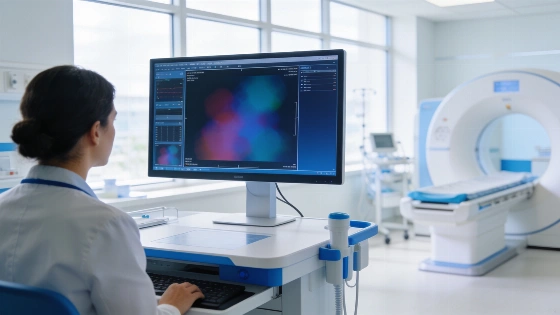
The opening lecture turned to the data behind precision care. Rodrigo Dienstmann, head of the Oncology Data Science (ODysSey) Group at the Vall d’Hebron Institute of Oncology in Barcelona, described how anonymised electronic health records, laboratory results and medical imaging can be analysed using artificial-intelligence methods to generate knowledge and apply it to cancer care. His lecture, scheduled for 23 November, was titled “Oncología digital y Real-World Data: la nueva frontera de la medicina de precisión”. The approach focuses on learning from patients treated in routine practice, whose characteristics and outcomes can differ from those of participants in controlled clinical trials.
Dienstmann said that learning from patients treated in consultations could help clinicians better guide treatment choice and sequencing. The data model discussed combines anonymised clinical records with test results and imaging, and is intended to assess how therapies perform in ordinary practice.
Isla linked the year’s advances to increasingly effective precision oncology, including a new generation of targeted therapies. She also cited chemotherapy combined with antibodies, bispecific drugs and cellular therapies that can attack cancer cells while acting on the immune system. The sessions address emerging evidence and its possible application in care across several tumour types.
The meeting was organised by the Medical Oncology Service at Hospital Clínico Universitario Lozano Blesa de Zaragoza, with the collaboration of Instituto de Investigación Sanitaria de Aragón (IIS Aragón). The institutional opening was scheduled for 11 a.m. on 23 November and brought together Luis Gómez, manager of the Zaragoza III health sector; Daniel Orós, scientific director of the institute; Diego Rodríguez, the hospital’s medical director; and Isla.
The institutional speakers connected research with day-to-day care. Orós said research is essential to health service management and directly affects routine oncology practice. Rodríguez described innovation as changes to how teams work and coordinate care, alongside the adoption of treatments and technology. The symposium brings together specialists from different Spanish centres to discuss how research can be translated into patient care.
The programme also covers comprehensive care, precision medicine and hereditary cancer, alongside accreditation of comprehensive cancer centres in Spain under EunetCCC. In breast cancer, section head Raquel Andrés said molecular biology has shown that the disease comprises distinct types. For the most common type, which expresses hormone receptors, more selective therapies have brought greater efficacy with lower toxicity, she said, improving survival and quality of life for patients.
Gynaecological cancer is another focus. Alfonso Yubero, an oncologist and coordinator of the hospital’s gynaecological tumours area, discussed treatment selection in endometrial cancer and developments in ovarian cancer, the gynaecological disease with the highest mortality. He said molecular knowledge of mutations now allows drugs that act on DNA repair and are improving survival. Other medicines deliver very high chemotherapy doses into tumour cells while avoiding many adverse effects associated with traditional chemotherapy.
AI applications in other Spanish services have included photo-based fault diagnosis, a separate example involving workshops rather than oncology.