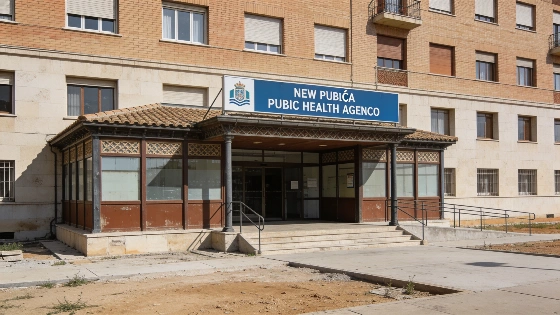
The new framework separates technical assessment of health risks from decisions on how to manage them. On 17 November 2026, the Consejo de Ministros approved the statute of the Agencia Estatal de Salud Pública (Aesap), created under Ley 7/2025. The royal decree sets the agency’s organisational and operating rules, establishing the framework for its launch.
Aesap will carry out independent technical and scientific surveillance, evaluate public-health risks and communicate its findings. It will monitor and evaluate the Red Estatal de Vigilancia en Salud Pública, track population health, detect early signs of emerging threats and handle information exchanges with public administrations and international bodies.
The Ministry of Health retains responsibility for policy planning and strategy, as well as direct risk management and interterritorial coordination. It also remains the highest health authority. The Comisión de Salud Pública and the Consejo Interterritorial del Sistema Nacional de Salud (CISNS) will continue as the main forums linking the ministry with the autonomous communities, while Aesap provides scientific advice.
The distinction matters in emergencies: the agency will supply specialist advice and scientific evidence, while authorities make decisions on the response. Its remit is population-level surveillance, separate from debates over access to care such as earlier coverage of healthcare access in Andalucía.
The agency will be attached to the Ministerio de Sanidad through the Secretaría de Estado de Sanidad and have its main headquarters in Zaragoza. Its work will follow the «Una sola salud» (One Health) approach, which considers human, animal and environmental health together. The statute also provides for cooperation with the Instituto de Salud Carlos III and joint working networks involving regional and local authorities.
Operationally, Aesap will have two departments: Vigilancia, Preparación y Respuesta; and Seguridad Química y Riesgos Ambientales. Three supporting areas will cover strategy, cooperation and communication; science, innovation and quality; and the Secretaría General. The agency will also support research and innovation, and continuing professional training is part of its remit.
The statute establishes three collegial bodies. The Consejo de Participación Social is intended to channel contributions from citizens, health professionals, patients, social organisations and the scientific community. The Comisión Intersectorial will coordinate work with other ministries whose policies affect health. The Comité de Ética y Salud Pública will issue recommendations on the ethical and social implications of Aesap’s actions and programmes.
The statute requires the agency to publish information periodically about its activity, including a general report on measures taken, resources used and progress against objectives. Final technical reports and opinions are to be public, subject to transparency and data-protection rules.
The Real Decreto will take effect the day after its publication in the Boletín Oficial del Estado (BOE). The Ministry of Health says Aesap will be formally constituted at the inaugural meeting of its Consejo Rector, which must take place within a maximum of three months after the decree enters into force. The statute also sets out a gradual transfer of functions and operational resources, overseen by a commission coordinating the process between the Ministerio de Sanidad and the Ministerio de Ciencia, Innovación y Universidades.
Transferred staff will retain their established rights and conditions. Future recruitment must use public calls governed by equality and merit, with ability also included as a selection standard. Aesap’s activity plans will be covered by a four-year management contract, subject to annual compliance audits.