The 97 phone numbers came from contact lists linked to 19 WhatsApp group administrators and 32 users classed as mobilisers. Spain’s National Centre for Immigration and Borders (CENIF), part of the National Police, sent its findings to the Audiencia Nacional. Investigators reviewed a wider mobilisation network of 19 WhatsApp groups and 1,141 users, whose calls urged people to enter Ceuta by sea or by swimming on 30 and 31 July 2026.
The numbers may belong to members of Moroccan security or intelligence services, but the report does not establish that all 97 owners held such positions. El Confidencial reported that police cross-checked the data against open sources, including a database associated with the hacktivist group Jabaroot. Investigators found possible personal identities in 49 cases.
Jabaroot has claimed cyberattacks against Moroccan institutions that were later verified, according to the report. A mass data leak in August 2026 exposed the identities of around 70,000 people affiliated with Morocco’s internal security services, particularly the DGST and DGSN. The database gave investigators a way to check possible identities, but it does not, by itself, confirm who used each phone number.
The report describes links spanning several bodies. Police say their monitoring identified DGSN commanders and DGST personnel at central and territorial offices. It also found references to Royal Gendarmerie personnel and assignments across palace security and other operational units, including traffic and coordination rooms. The network analysis covered direct and indirect links: intermediary users’ address books connected people who had not saved one another’s numbers directly.
Investigators examined how users saved contacts in their phone books. In cases involving two administrators and six mobilisers, direct contacts had stored numbers under labels suggesting roles such as police officer or gendarme. The report also identifies intermediary users whose contact lists connected people who had not saved each other’s numbers directly. CENIF investigators suggest these intermediaries may have made links to institutional profiles harder to trace; police say they cannot rule out that the intermediaries themselves belonged to Moroccan security services. The contact links are investigative leads, not proof that every number’s owner held an official position or acted in an official capacity.
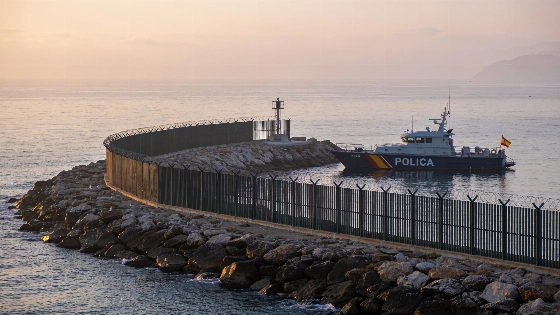
The new analysis follows an earlier police report listing 1,141 phone numbers, mainly associated with social media. Police say some users promoted entry into Ceuta by sea or by swimming on 30 and 31 July 2026, citing the Supreme Court’s STS 814/2026 ruling. Issued in late June, the ruling said migrants arriving by swimming could not be expelled directly at the border. Investigators’ broader inquiry examines whether online mobilisation was coordinated under an “authorship by diffusion” theory, in which responsibility may have been spread across the network, including possible institutional contacts. A separate Ceuta deployment report dealt with Defence’s classified military file after the crisis.
The CNI has separately assessed that it found no evidence Morocco organised the July crossings, while reporting that Moroccan authorities knew online calls were circulating and failed to respond effectively. Declassified messages reportedly show a CNI officer contacted the Guardia Civil on 29 July about calls urging people to swim into Ceuta or climb the border fence the next day. The police report’s findings and the CNI assessment are among the evidence being considered in the active judicial inquiry; the reported phone links are not a court finding of Moroccan state responsibility.
The police report went to Audiencia Nacional magistrate María Tardón, who is overseeing the case. Investigators have urged the court to seek information from Google and Meta about profiles associated with the calls, including account ownership and communications. The inquiry continues to examine how online activity related to participants’ entry into Ceuta.
The 78-page CENIF report went to Audiencia Nacional magistrate María Tardón.