In its 17 November 2026 weekly report, Spain’s Ministry for the Ecological Transition and the Demographic Challenge (MITECO) reported peninsular reservoir storage at 31,950 hm³, or 57% of total capacity. Storage rose by 905 hm³ during the reporting period, equal to 1.7 percentage points of capacity. The national total was above the 29,935 hm³ recorded a year earlier.
MITECO’s basin figures ranged from 42.7% in the Duero to 77.4% in the Cuencas internas de Cataluña. The other basin levels were: Cantábrico Oriental, 47.9%; Cantábrico Occidental, 48.0%; Miño-Sil, 46.3%; Galicia Costa, 43.7%; Cuencas internas del País Vasco, 61.9%; Tajo, 55.1%; Guadiana, 72.3%; Tinto, Odiel y Piedras, 62.9%; Guadalete-Barbate, 74.3%; Guadalquivir, 69.1%; Cuenca Mediterránea Andaluza, 62.4%; Segura, 46.5%; Júcar, 52.3%; and Ebro, 45.3%. The Duero held 3,247 hm³ of its 7,602 hm³ capacity after gaining 111 hm³ in a week. It remained below its ten-year average of 48.3% and its 55.7% level on the same date in 2025. Catalonia’s internal basins recorded the highest level, while Galicia Costa and the Ebro were among the lower-storing systems.
Precipitation affected the whole peninsula. Vigo (A) recorded the maximum: 199.1 mm, or 199.1 litres per square metre. AEMET data reported on 15 November put accumulated rainfall since the hydrological year began on 1 October at 79 litres per square metre, 23% below normal for that point in the year. A separate RUSSPAIN climate-risk survey examined public views on preparedness for extreme weather.
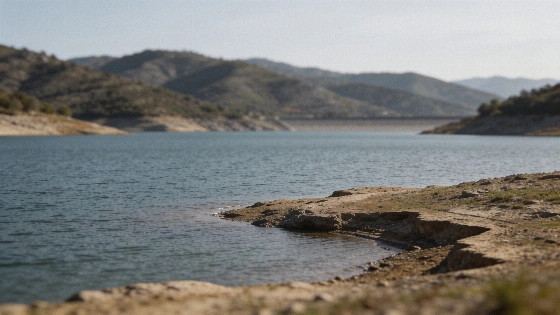
Andalusia’s reservoirs rose for the first time after six months of declines, reaching 68.9% of capacity, or 7,647 hm³, on 17 November. Within the region, the Guadalquivir system held 5,545 hm³, or 69.1%, after gaining 76 hm³ in a week; Tinto, Odiel y Piedras stood at 62.9%, with 144 hm³ stored. The rise followed autumn rainfall. In Navarre, reservoirs were reported at just over 23% of capacity in mid-November, with visibly exposed margins at Itoiz.
MITECO also directs readers to its web application, which presents the figures visually. The update describes the BD-Embalses_1988-2022.zip file as updated weekly; it contains data on peninsular reservoirs with capacity above 5 hm³ dating back to 1988.