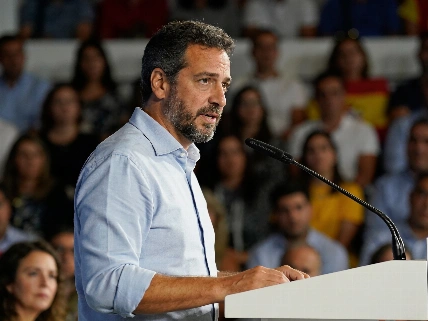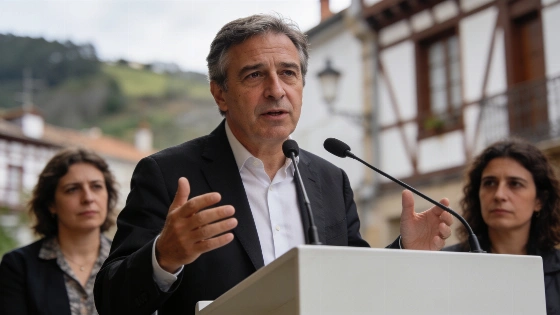
At an outdoor rally in Eibar, Alberto Núñez Feijóo accused Pedro Sánchez of failing to condemn an attack on PP candidate Jon Echeverría. The clash came as migration featured in speeches by the PP and Vox, while parties to the left of the PSOE promoted proposals on tax and housing, alongside changes to work. The attack took place during campaigning for Spain’s 29 November general election and led the PP to cancel its planned campaign tour of Gipuzkoa.
Feijóo visited Eibar on 17 November to support Echeverría, a 22-year-old PP candidate for Congress in Gipuzkoa who was attacked in Hernani three days earlier. Around 11 a.m. on 14 November, Echeverría and party colleagues were preparing an information table in Plaza de los Tilos when a group threw eggs and stones, along with firecrackers. The event was suspended, and Ertzaintza officers escorted the group away; no injuries were recorded. Feijóo said the PP would not be silenced and that “the street belongs to all Spaniards.” He criticised Sánchez for offering condolences after the death of an ETA member but not condemning the attack on the candidate. Feijóo also accused the Socialists of making agreements with EH Bildu and said he would not make pacts with those he called violent. He defended the PP’s agreements with Vox. PSOE spokesperson Patxi López, in turn, accused Feijóo of trying to make the PSOE responsible for violence in the campaign.
The Basque campaign has also drawn attention to a separate terrorism investigation: an earlier report concerned two Jardun members held in provisional detention. The cases are distinct.
Feijóo was also preparing a legal reform to allow Basques who left the region because of ETA threats to vote again in the Basque Country. The proposal was listed as pledge 132 in the PP’s programme for the 29 November election. In Bilbao, Feijóo pledged to establish a national parador in Durango and advance the Basque Y rail link, which he said would connect Euskadi with the rest of Spain. He also promised to end what he described as migration out of control, while arguing that immigration should be legal and orderly. He was due to close the day with a rally in Logroño.
Vox leader Santiago Abascal, campaigning in Lanzarote and Gran Canaria, defended his wife Lidia Bedman’s receipt of Spain’s social thermal bonus, a benefit for vulnerable households. The Community of Madrid awarded Bedman €210.71 in May 2026 for the 2025 exercise; the payment was reportedly granted because she qualified as part of a large family. InfoLibre reported that this was her first time receiving the aid. Abascal also backed deportation centres in third countries for people entering illegally, and praised a proposal by Austria, Germany, Denmark, Greece and the Netherlands to establish such a centre in Rwanda in 2027. The proposal has prompted concern from the United Nations.
Ada Colau of Frente Amplio proposed a progressive VAT rate on electricity, gas and water at a Madrid press breakfast. Her plan would set the rate at zero for the lowest consumption levels, vulnerable households and people using self-consumption, rising progressively to 21% for the highest bands. Colau also wants a super-reduced rate for basic services and goods, including hairdressers and veterinary care, as well as nappies. Frente Amplio’s programme also proposes investing 1% of GDP a year in housing, around €17 billion annually, with the aim of adding 1.5 million homes to the public housing stock over 12 years.
Colau called for a reform of the Workers’ Statute to protect wage rises in line with inflation. She said collective agreements currently leave 60% of workers outside that system. She also called for an audit and a state pact on rail safety after criticising increased pressure on the network following liberalisation. On the proposed Rwanda deportation centre, she urged Spain’s government to challenge the measure at the Court of Justice of the European Union.
Housing proposals included a Compromís-Front Valencià plan to remove property transfer tax on first homes costing less than €350,000 and raise it by 200% from a buyer’s third property. The coalition also proposed banning construction in flood-prone areas. Águeda Micó separately called for restrictions on purchases by investment funds and for the state to expropriate groups holding more than 800,000 homes.
Podemos candidate Irene Montero proposed food price caps, a public supermarket and a 30-hour working week. She also called for prison sentences for companies that require illegal unpaid overtime, citing a total of 130 million hours, and proposed lowering the retirement age to 63.
Other candidates focused on regional priorities. BNG candidate Néstor Rego called for more political weight for Galicia, alongside a reindustrialisation plan and caps on fuel prices. UPN-PP candidate Leticia San Martín said Navarra’s housing law had reduced rental supply and pushed out people with fewer resources. In the Canary Islands, Unidad del Pueblo Canario candidate Luis Campo praised the left-wing electoral coalition formed by Nueva Canaria, Podemos, IU and Sumar.