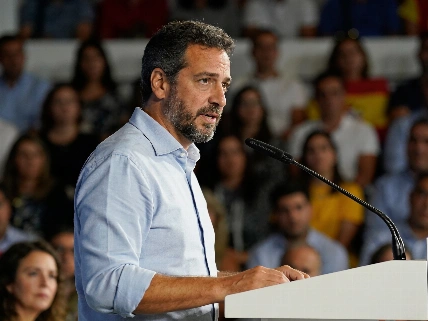
More than 11,000 people arrived irregularly in the Canary Islands during the first half of November, as the regional president sought additional support from the Government. Fernando Clavijo said after a ministerial commission that he had received no new measures or confirmation of extraordinary resources. Spain had declared a migration emergency in the islands on 10 November. Clavijo said the archipelago could not continue to face the situation practically on its own and called for involvement from the Spanish Government and Europe.
The Government had declared a migration emergency in the islands, provided €15.18 million and committed €1 million for a Red Cross health-services reinforcement. Clavijo said arrivals had worsened: on Saturday, 14 November, 1,580 people were rescued from 15 boats across three islands. Regional authorities described it as the highest single-day figure in 32 years of records for the Atlantic route, surpassing the previous record of 1,461 arrivals on 7 November. Nearly 3,700 people reportedly arrived across the archipelago over that weekend. The arrivals followed departures from West Africa and put particular pressure on El Hierro, where more than 3,300 people were reported to have arrived since the start of November aboard about 30 boats. Some passengers rescued near El Hierro had travelled for approximately six days after departing Gambia. Clavijo said medical resources were lacking and diplomatic efforts had not reduced the flow.
The migration dispute formed part of a wider campaign day ahead of the 29 November general election. The campaign began on 13 November. In Eibar, Alberto Núñez Feijóo backed Jon Echeverría, the PP candidate for Guipúzcoa, after Echeverría was assaulted at an event in Hernani over the weekend. On 14 November, Echeverría and PP colleagues were setting up an information table in Plaza de los Tilos when eggs, stones and firecrackers were thrown at them, according to the party. The event was cancelled and the group left with Ertzaintza officers; no injuries were reported, and the Basque regional police opened an investigation. The PP also requested police protection for Echeverría and his campaign team from Interior Minister Fernando Grande-Marlaska. Feijóo accused Pedro Sánchez of failing to contact those attacked or demand an end to violence from his Bildu allies. Echeverría said he was not afraid of masked people or stone-throwers.
Feijóo was also due to close events in Bilbao with Javier de Andrés and in Logroño with Cuca Gamarra. Pedro Sánchez had an Albacete campaign event scheduled for 18:30, while Santiago Abascal was due in Lanzarote around midday and in Las Palmas de Gran Canaria later. A televised debate between Sánchez and Feijóo is scheduled for 19 November, as covered in RTVE debate plans.
Other candidates used the day to set out competing positions. ERC’s Gabriel Rufián proposed a concentration government in Catalonia if the election produces a PP-Vox government in Madrid, saying he would argue for an administration led by ERC. Ada Colau, the Frente Amplio candidate, urged the Government to challenge a plan by Germany, Greece, Italy, the Netherlands and Denmark to establish migrant return centres in Rwanda. She said the centres would breach international law; that assessment was her position.
Colau also proposed linking rises in the minimum wage to inflation and applying a super-reduced VAT rate to essential goods such as nappies. She called for a €200-per-child benefit to be approved before the election. The Council of Ministers was expected to address a minimum-wage increase on Tuesday, while Deputy Prime Minister Yolanda Díaz defended the timing as part of the ordinary course of economic policy. A railway strike also marked the day.