Only biology has a tighter contest in the 2026-2027 specialist-training intake: 17.97 provisional candidates per place, compared with psychology’s 13.39. The overall ratio across the seven disciplines is 3.15, according to provisional figures published by Spain’s Ministry of Health on 13 November 2026. Biology recorded 1,240 admitted candidates for 69 places; psychology ranked second by admitted candidates per place.
Psychology has 3,922 provisionally admitted candidates and 209 listed as not admitted. The ministry’s lists cover 40,474 admitted candidates and 3,071 not admitted across 12,850 places in medicine, nursing, pharmacy, psychology, biology, chemistry and physics. Medicine accounts for the largest number of places, with 9,676, while nursing has 2,341. The figures may change once the ministry processes applicants’ corrections.
The 293 psychology places are 13 more than in 2025-2026, an increase of 4.64%. Provisional admissions have fallen by 29 from the previous intake’s 3,951, bringing the ratio down from 14.11 candidates per place. The earlier figures show a ratio of 11.3 in 2024-2025 and a peak of 21.7 in 2021-2022.
Psychology places account for 2.3% of the total offer. Of the 293 posts, 269 are in public centres and 24 in private centres; 29 may be filled through the disability quota. Catalonia has the largest regional allocation, with 53, while Andalusia has 48. The Community of Madrid also has 48.
The Consejo General de la Psicología and the OCU are among the organisations seeking a substantial increase in specialist places. The council is also due to hold a workplace mental-health event on 19 November.
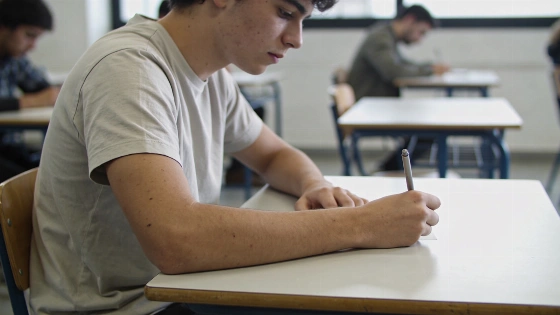
Applicants can submit corrections from 16 to 27 November 2026, inclusive. Those with a DNI or NIE must complete the process electronically, the ministry says. The examination is scheduled for Saturday, 23 January 2027. Candidates are called from 13:00 in mainland Spain and 12:00 in the Canary Islands, with the test beginning an hour later in each location. Admission to the examination process does not itself guarantee a training place.
The examination comprises 200 questions plus 10 reserve questions, each with four options and one correct answer. Candidates have four and a half hours. The exam score accounts for 90% of the final mark and academic merit for 10%; the ministry will publish the academic assessment with the provisional test results. Electronic devices and items capable of storing or transmitting information are prohibited. Only analogue watches with hands are allowed. Passive detection equipment may be used.