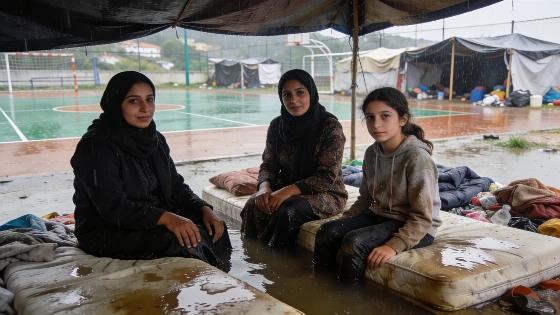
Heavy rain has left hundreds of migrant women and children in Ceuta sleeping on wet mattresses. Volunteers and residents criticize authorities for prioritizing men and failing to provide adequate shelter for vulnerable groups.
In Ceuta’s El Príncipe neighborhood, a sudden downpour has turned a makeshift migrant camp into a scene of distress, with around 400 women and children—many of them minors—forced to sleep on soaked mattresses. The rain collapsed tents and left basic shelter unusable, exposing the precarious conditions faced by some of the city’s most vulnerable new arrivals. Volunteers and local residents, who have been supporting these families since the mass entry at the end of July, now warn that the situation is unsustainable and accuse authorities of neglect.
According to those on the ground, many of the women and girls have not had access to showers for a week. The shift from heat and humidity to cold and wet has worsened health problems, with several minors reportedly ill and lacking proper medical attention. One mother, Meri Am Samadi, described how her 15-year-old daughter, Walae Hadouch, is suffering from fever and throat pain, despite a hospital visit and basic medication. Volunteers like Hafida Musfata Tami, easily recognized by her yellow vest, move quickly through the camp, trying to organize help and keep spirits up as girls chant for shelter and rights in dariya, the Moroccan Arabic dialect.
Frustration is growing among residents and volunteers, who point out that while 1,400 men were quickly relocated from the El Trampolín beach, women and children remain in limbo. Some minors have been registered by city staff but are still waiting for transfer. Ahmed Enfed-Dal, president of the local neighborhood association, says efforts to move the group to a prepared warehouse have stalled due to resistance from nearby residents. For now, the camp remains the only option, with minimal sanitation and food provided by various associations. Security concerns persist, as volunteers try to protect the women and girls from potential harm.
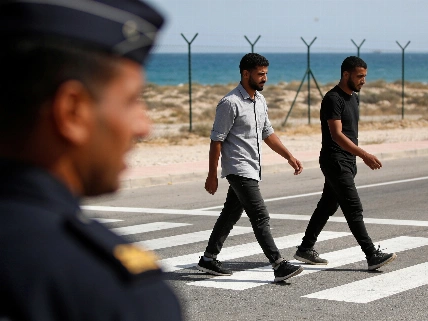
Elsewhere in Ceuta, the government has set up a large parking area in Loma Colmenar to house migrants, but local residents remain uneasy. Lubna, who lives opposite the site, describes a tense atmosphere and ongoing worries about noise, safety, and the presence of unaccompanied minors sleeping outdoors. The process of admitting migrants into the new facility is slow and tightly controlled by police, with only small groups allowed in at a time. The influx continues, fueled by word-of-mouth among migrants, and the pressure on local infrastructure shows no sign of easing.
Meanwhile, city authorities have focused on clearing the area around the Centro de Estancia Temporal de Inmigrantes and El Trampolín beach, where over a thousand mostly Maghrebi migrants were temporarily gathered so municipal cleaning crews could restore the site. The previous day’s efforts were disrupted when hundreds more migrants arrived, complicating the operation. Mina Mohamed Laarbi, the city’s deputy environment minister, directed workers to finish quickly so the area could be reopened, emphasizing the need to balance humanitarian response with public order.
This crisis in Ceuta highlights the ongoing challenges of managing sudden surges in migration, especially when vulnerable groups are involved. The situation echoes previous emergencies in the city, such as the urgent transfer of hundreds of migrant girls to mainland Spain, as reported in recent coverage of government relocation efforts. With local resources stretched and tensions rising, both authorities and residents face difficult choices about how to ensure safety and dignity for all affected.
Ceuta’s unique position as a Spanish enclave on the North African coast makes it a frequent entry point for migrants from Morocco and other countries. The city’s limited capacity to absorb large numbers of arrivals has led to repeated humanitarian and logistical crises. Spanish law requires special protection for minors and vulnerable individuals, but implementation often lags behind needs on the ground. The current emergency underscores the importance of coordinated action between local, regional, and national authorities, as well as the crucial role played by volunteers and civil society in filling gaps in official response.