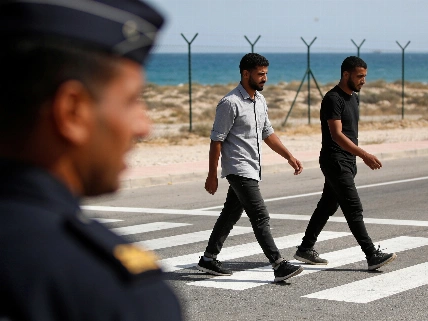
Ceuta has been thrown into turmoil after 70,000 Moroccan migrants entered the city in just two days. With daily life upended and authorities locked in conflict, Spain’s largest migration crisis remains unresolved after fifty days.
In just 48 hours, seventy thousand Moroccan migrants entered Ceuta—almost equaling the city’s own population. This sudden influx has left Ceuta’s streets, institutions, and residents in ongoing turmoil, with no resolution in sight even after fifty days.
Unlike the 2021 incident, when around eight thousand migrants crossed into Ceuta, this crisis erupted despite what were considered stable relations with Rabat. The scale and speed of arrivals caught both local and national authorities unprepared, exposing gaps in the government’s response under Pedro Sánchez. The handling of the crisis is now under judicial scrutiny, raising questions about accountability at the highest levels. Official figures remain contested: central authorities report a much lower number of migrants still in Ceuta, while the city’s administration estimates about 13,000 remain.
Since August 10, more than 5,300 migrants have voluntarily returned from Ceuta to Morocco, with an additional 90 withdrawing their asylum applications.
For Ceuta’s residents, daily life has been upended. Public spaces are occupied, temporary settlements have appeared, and the city’s limited infrastructure is under severe strain. Efforts to manage the situation have faced repeated setbacks: a police union’s legal challenge temporarily blocked the opening of a key camp at the port, delaying the identification and processing of 1,700 migrants. Although the Audiencia Nacional has since lifted the suspension, the episode highlights the bureaucratic and legal hurdles that continue to slow progress. The legal status of the port camp remains uncertain, as the Audiencia Nacional initially suspended the project on September 16–17, 2026, before later rejecting an urgent request for a complete halt, according to La Vanguardia and RTVE.
Political divisions have deepened the crisis. The central government and Ceuta’s autonomous administration are at odds over responsibility and resources. Opposition parties have used the government’s missteps to fuel further division. Proposals to relocate migrants to the Spanish mainland have been rejected by several regional governments, while local objections have blocked the use of sports facilities and other potential shelters. The return of migrants to Morocco is also stalled by legal requirements and uncertainty over Rabat’s willingness to cooperate. According to the Ministry for Territorial Policy, as of September 16, 4,160 migrants had been officially registered and accommodated, with 1,917 cases already processed for potential expulsion, pending asylum review.
The situation is especially critical for the estimated two thousand unaccompanied minors, who are entitled to greater legal protections and require specialized care. With no immediate solution, both migrants and locals remain in limbo, their futures shaped by political gridlock and administrative inertia.
Media reports indicate that the planned capacity for the port camp has varied, with estimates ranging from 700–1,000 places to earlier plans for up to 1,700 people. The ongoing legal dispute over the camp’s operation continues to affect the pace of migrant processing and accommodation.
Keeping Ceuta in a prolonged state of emergency is a dangerous risk. The threat of social breakdown grows each day, especially in a city where nearly half the population is Muslim and tensions can quickly escalate. The longer the crisis continues, the more it damages Spain’s international reputation, raising doubts about the country’s ability to control its borders and manage humanitarian emergencies.
Resolving the crisis requires more than blame and legal battles. Every institution with a stake in Ceuta’s future—government, judiciary, security forces, and the media—must move beyond finger-pointing and focus on practical, lawful solutions. The immediate priority is to accelerate the legal process for identifying and, where appropriate, returning migrants who do not qualify for asylum, while ensuring humane treatment and basic services for all. Only by restoring order and upholding the law can Ceuta hope to regain stability and Spain begin to repair its credibility.