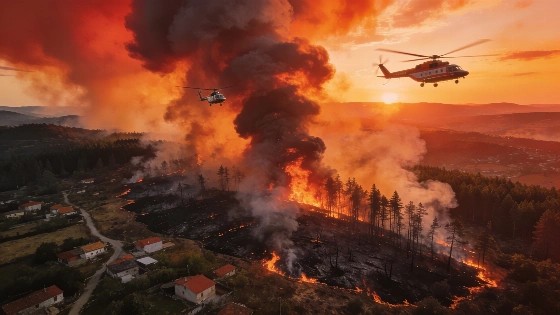
A wildfire broke out Monday evening on Monte de la Tortuga in Ceuta, burning up to 10,000 square meters of forest before firefighters contained it. The blaze renewed concerns about risks linked to makeshift migrant camps in the area.
Initial reports pointed to open fires lit by migrants camping on the mountain as a possible cause, but local authorities and fire services say the official cause remains under investigation. Ceuta officials, cited by several Spanish media outlets, suspect campfires in informal settlements may have played a role. No final conclusion has been reached. Authorities say the investigation must be completed before blame is assigned.
The government of Ceuta said the fire started around 20:00 in the upper part of Monte de la Tortuga. Fire patrols spotted it early and raised the alarm, allowing the Servicio de Extinción de Incendios y Salvamento (SEIS) to mobilize and contain the flames by 21:45. Fourteen firefighters worked directly on the fire, while nine off-duty colleagues volunteered to reinforce the station if the situation worsened. The wildfire was fully contained and extinguished by 22:00 local time.
Protección Civil and Policía Local support was coordinated through the 112 emergency system, with Parque Móvil also involved. All units remained on alert as the fire was monitored. The affected area is estimated at 8,000 to 10,000 square meters, pending final confirmation. The government said the risk of forest fires has been especially high this summer, prompting more patrols in areas where irregular migrant settlements have appeared. Reports from The Objective and LaSexta say makeshift camps and ongoing drought leave these areas more vulnerable.
Ceuta’s authorities have repeatedly warned that campfires in forested areas pose a direct hazard, especially as the region faces continued pressure from irregular migration. The influx at the end of July led to a rise in makeshift camps, making fire prevention harder and stretching local resources. Similar challenges have emerged elsewhere in Spain, as described in an earlier report on wildfire recovery in Valencia.
Reuters reported that nearly five weeks after the July influx, more than 10,000 migrants, including unaccompanied minors, remained in Ceuta. The ongoing crisis had prompted public protests and led Madrid to take direct control of the port area to establish a temporary camp, reflecting the strain on local infrastructure.
The fire was contained without injuries or major property damage. High temperatures and dense vegetation around unregulated settlements create a risky mix for local services, which have limited resources. The government has increased fire patrols, while irregular migration and unsafe camping continue to pose fire risks. Ceuta’s emergency services face challenges that go beyond their immediate control.