A wildfire scorched 37 hectares in Valencia’s Devesa del Saler. Authorities now await a critical damage report to guide regeneration. Political tensions flare as blame shifts over missed prevention measures.
Devesa del Saler, often called Valencia’s green lung, is facing its worst environmental crisis in decades. A wildfire burned through 37 hectares of Mediterranean forest and scrub, leaving the city’s leaders under pressure to explain what went wrong and how they plan to restore the area. The full extent of the damage is still unclear, and political opponents are trading accusations over who failed to prevent the disaster.
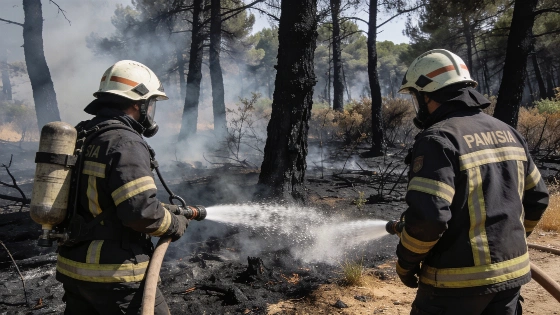
Firefighters are still working to put out the last hot spots after the blaze broke out on August 27. The fire forced evacuations from apartments, the beach, Saler village, and two campsites. It is now considered the second most severe wildfire in the area’s history. Residents want answers about the causes and what will be done next.
According to Valencia’s municipal fire chief Enrique Chisbert, as of September 3, small smoldering areas remained in Devesa del Saler, so the fire was not yet officially declared extinguished.
The immediate focus is on assessing the damage. The Generalitat’s Centro de Estudios Ambientales del Mediterráneo (CEAM) is preparing a detailed report on the severity of the fire. This analysis will guide the city’s recovery plan, which may include selective logging and new tree planting, but only after monitoring how the area recovers naturally over the coming months.
Mayor María José Catalá has asked the regional Environment Ministry for support, saying the city needs solid data before starting any restoration. She pointed out a major gap in the city’s earlier fire prevention plan: the Sideinfo system, a network of 40 water cannons meant to protect Devesa during heatwaves, was not included until January. Catalá blames the previous administration for the delay.
On the day of the fire, Sideinfo was activated in response to an orange wildfire alert to cool the forest and slow the flames. But opposition politicians are skeptical. Socialist councillor Borja Santamaría called the city’s response “propaganda” and said the administration failed to put real prevention measures in place before the fire. He accused Catalá of taking credit for systems she did not create and of relying on announcements after the fact instead of planning ahead.
Official estimates indicate that the actions of firefighters and aerial support reduced the potentially affected area by about 80%. In the aftermath, the municipality reported the removal of 750 kg of waste from the fire site as part of early cleanup efforts.
Regional Environment Minister Vicente Martínez Mus has promised Generalitat support to speed up updates to Valencia’s Local Forest Fire Prevention Plan. He noted the special challenges of managing a landscape like the Saler, which is shaped by heavy human use, and said environmental approvals for new firebreaks and other measures would be streamlined. “The Saler may be small, but its emotional value for Valencia is enormous,” Martínez Mus said, highlighting the political and social importance of the recovery.
Once the emergency phase ends, the CEAM report will guide the first recovery steps. Only after understanding the fire’s impact on vegetation will officials decide whether to cut damaged trees, replant, or let the area recover on its own. The city’s updated prevention plan now includes phased use of the Sideinfo system, with one stage focused on protecting the Saler’s urban core.
The political argument continues. The Socialists say the city’s recovery plan is vague and that warnings about the need for prevention were ignored for years. They argue that the administration’s actions are reactive and that no real investments or measures were in place before the fire. This local dispute reflects wider concerns about wildfire readiness across Spain, especially as heatwaves become more common. As reported earlier, record temperatures have already pushed other regions to the edge, making prevention and fast response even more urgent.
Experts say it could take up to twenty years for Devesa del Saler to recover its former appearance. City leaders are relying on technical studies and new infrastructure to regain public trust, but the ongoing blame game points to a deeper problem: prevention was neglected until disaster struck. In a region where wildfires are now a regular threat, this fire shows the cost of delayed planning and the need for real, forward-looking policies.