Between kilometre points 388.2 and 396.8 near Palma del Río in Córdoba, investigators recorded 11 deformations on the Madrid-Seville high-speed line. Around 500 kilometres away, nine signal overruns occurred within roughly 1.5 kilometres of Madrid’s Puerta de Atocha station.
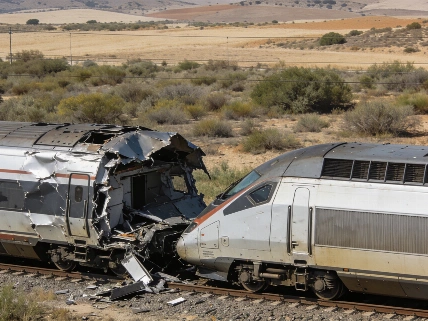
Together, those locations account for about a third of the 62 precursors recorded on the Madrid-Seville line by the State Agency for Railway Safety (AESF) between 2017 and 2024. The line is also associated with the Adamuz and Urda accidents, which left 115 people dead over nine months. A precursor is a fault that could contribute to an accident in certain circumstances, not an accident in itself.
The AESF data, released in response to a transparency request filed after the Adamuz crash, count 207 incidents categorised as “AVE”. Track deformation made up 103 cases, alongside 78 signal overruns, 25 broken rails and one signalling failure. Annual totals approached 50 in the last two years of the dataset, largely as overruns rose from fewer than 10 to 24 in each year.
A signal overrun happens when part of a train passes a point beyond which it has no authority to move. The train may pass a signal and stop before reaching a danger point, or enter a section where another train could be present. Fernando Minaya, a member of the College of Civil Works Engineers and a court expert, called the increase alarming. He said the causes could not be pinned solely on driver error or a loss of communication with the control centre.
“The railway system is based on barriers. When one fails, another has to activate,” Minaya said in Spanish, translated into English. He argued that a sharp rise in overruns should prompt scrutiny of whether those safeguards are working.
One serious case occurred at Cuenca-Fernando Zóbel station on 25 June 2024. A high-speed train travelling from Murcia to Madrid resumed its journey with authorisation from the Albacete circulation centre, which had not realised that safety systems had stopped the train after it passed a signal improperly. The order was corrected immediately. The driver was told to stop and reverse to the station. The Railway Accident Investigation Commission examined the incident.
José María Goicolea, a member of Spain’s association of civil engineers, said the case could have had consequences similar to the Urda accident. He said the commission called for protocols that would make a safe response to an overrun less dependent on a single human action.
Across the high-speed network, about 80% of signal overruns took place less than a kilometre from a station or railway installation. Track deformation also recurs in concentrated areas: two-thirds of such incidents were recorded within stretches of five kilometres or less. On the Madrid-Barcelona line, four deformations were recorded at kilometre point 470 beyond Lleida between 2020 and 2023.
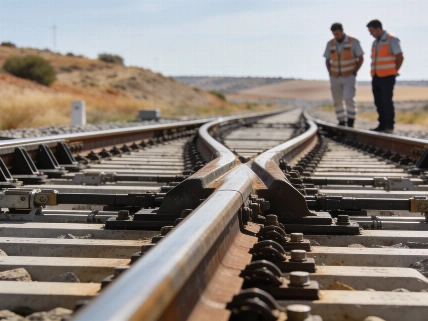
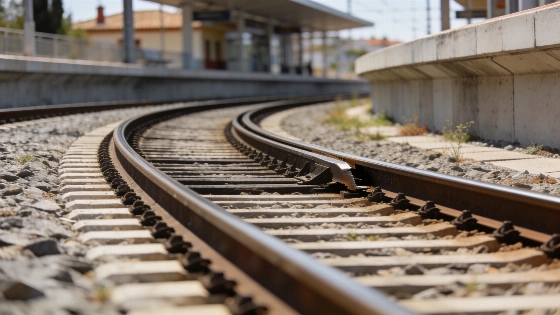
AESF reports identify high temperatures as a leading cause of track deformation. The annual total peaked at 22 in 2022, fell to 14 in 2023, then rose to 18 in 2024. Goicolea said recurring defects at particular locations could also have geological explanations and may continue until corrected. He stressed the importance of detection by track-inspection trains. The focus on track condition also follows recent repair findings that reported at least three new deformations on the rebuilt Adamuz section.
The Madrid-Barcelona and Madrid-Seville corridors recorded the highest totals, in part because they are among the longest high-speed lines. Of the 25 rail breaks in the eight-year dataset, 17 were on the Madrid-Barcelona route. Three occurred at kilometre point 356: one in January 2023 and two more in January and April 2024.
Across the whole Spanish network, the AESF’s 2026 report says precursor totals fell in 2025 from the peaks of 2023 and 2024, but remained above the 2020–2024 average. It reported fewer signal overruns and a marked improvement in rail-break figures. Track deformations, which make up more than half of cases, also fell from the previous year; the agency attributed that change to infrastructure work. The rate of precursors per million train-kilometres has nevertheless risen in recent years, particularly on conventional lines, indicating that incidents are being detected more frequently.
The high-speed analysis counts only the 207 incidents labelled “AVE”; the AESF dataset contains another 27 incidents on high-speed lines under other categories. The accompanying map locates 196 of the 207 “AVE” cases, leaving out 11 that could not be geolocated. The table includes all 207, plus the additional 27 incidents.
Minaya called for an infrastructure audit and analysis of the Adamuz and Urda accidents to identify recurring problems and take preventive measures. Goicolea also urged comprehensive risk and vulnerability assessments to identify parts of the network requiring closer monitoring and priority maintenance.